AI Use Cases in Electronics: Proven Practices for Scaling
Many electronics OEMs and EMS providers have already demonstrated that a model can classify inspection images, forecast component demand, or summarize engineering records. The harder problem is sustaining that capability across product revisions, factories, suppliers, and rapid changes in component mix. A model that performs well during a controlled trial can lose credibility after an ECO, a new contract-manufacturing site, or a package transition changes the underlying data. Scaling AI therefore requires the same discipline applied to process qualification: defined intended use, controlled inputs, measurable acceptance criteria, and an owner who understands the manufacturing consequences.
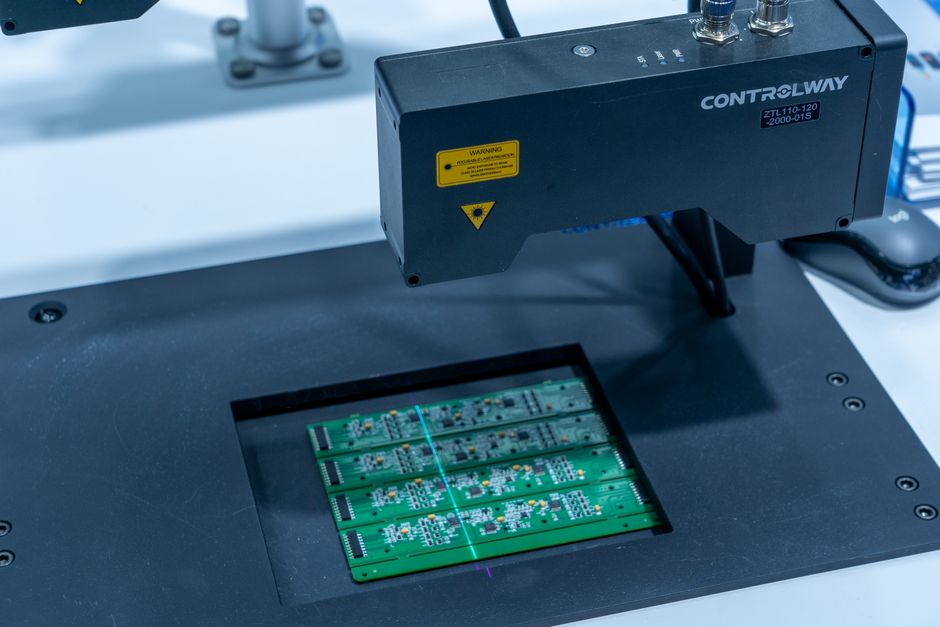
The most durable AI Use Cases in Electronics are embedded in engineering and factory control loops rather than presented as separate analytics dashboards. They give a component engineer better alternate evidence, warn an SMT process engineer about emerging drift, help a test engineer isolate a failure signature, or provide a supplier quality engineer with a coherent lot history. The following practices focus on moving from technically credible pilots to capabilities that survive high-mix production, compressed NPI schedules, and global change control.
Choose Decisions, Not Technology Demonstrations
Experienced teams frame a use case around a decision and its consequence. Predicting a low-yield work order is not enough; the workflow must specify who receives the warning, what evidence accompanies it, which containment actions are permitted, and how effectiveness will be confirmed. Similarly, a component-risk score only matters if it changes sourcing review, alternate qualification, allocation, or customer-commitment decisions before material availability interrupts the build plan.
Prioritize AI Use Cases in Electronics where intervention is both feasible and valuable. Predicting a defect after a PCBA has shipped offers less leverage than detecting process drift before the next panel enters reflow. Flagging an obsolete component without considering approved alternates, redesign lead time, lifetime demand, and existing inventory creates noise. A high-value system identifies an actionable window and presents options consistent with engineering controls.
Maintain a decision specification for each model. It should state the intended user, product scope, required input freshness, expected output, acceptable response time, escalation conditions, and prohibited uses. Include the economic and quality asymmetry of errors. Missing a latent solder-joint risk may be substantially more serious than sending a few additional units to review, while an overly conservative shortage model can trigger unnecessary purchases and excess inventory.
Build Revision-Aware and Process-Aware Data
Electronics data cannot be made production-ready by placing unrelated tables in a common warehouse. The joining logic must reflect how the product was actually built. At minimum, teams frequently need effectivity-aware links among EBOM, MBOM, approved manufacturer parts, ECOs, work orders, component lots, equipment recipes, inspection programs, test limits, repair actions, and field returns. Serial-level genealogy is especially valuable for connecting subtle process conditions to later failures.
A proven practice is to model time and revision explicitly. When an ECO changes a capacitor, stencil aperture, firmware revision, or test limit, historical labels may no longer describe the current process. Training data should distinguish units built before and after effectivity, including deviations and temporary substitutions. This prevents a model from treating legitimate design changes as anomalies or combining failure modes that require different corrective actions.
For Electronics Manufacturing AI, defect taxonomies deserve the same attention as numerical features. AOI, ICT, functional test, repair, supplier quality, and field service may use different names for related symptoms. A bridge between symptom, confirmed defect, causal mechanism, and corrective action makes cross-functional learning possible. Do not relabel every failed test as a product defect; fixture instability, software configuration, operator handling, and measurement-system error must remain visible.
Data-quality monitoring should run alongside model monitoring. Track missing product revisions, unmatched serial numbers, delayed repair records, unexpected test-limit changes, and shifts in inspection-image characteristics. When an interface fails silently, prediction quality may appear to decline even though the underlying model is unchanged. Assign data ownership to the functions that understand the source process, not solely to a central analytics team.
Apply Engineering Constraints Before Optimization
Pure statistical ranking is dangerous when it ignores physical, regulatory, or contractual boundaries. BOM Optimization AI should filter candidates through form-fit-function requirements, derating rules, environmental ratings, package and land-pattern compatibility, firmware dependencies, supplier approvals, and compliance documentation before ranking commercial attractiveness. The system should never imply that a similar description makes two components interchangeable.
The same principle applies to PCB Design Automation. Layout suggestions must respect impedance, creepage and clearance, thermal behavior, placement keep-outs, fabrication capability, test-point access, panelization, and assembly tolerances. AI may explore a broad design space, but deterministic design rules and engineering sign-off should constrain what is eligible for release. The output should explain which objective improved and which tradeoffs were introduced.
In production scheduling, enforce material, tooling, qualification, maintenance, staffing, and customer-priority constraints before optimizing utilization. Maximizing OEE on one line can worsen overall delivery performance if it consumes an allocated component needed for a higher-priority build. Electronics supply-chain planning is a network decision involving demand confidence, component allocation, lead times, alternates, inventory positions, and recovery options. Local optimization should not be mistaken for factory-level value.
Design Inspection and Test Models Around Confirmed Truth
Inspection models are only as good as their label discipline. AOI calls represent suspected visual anomalies, not confirmed defects. Build a feedback path from review, rework, destructive analysis where appropriate, and subsequent electrical test. Separate nuisance calls from genuine defects, and distinguish defect type from likely cause. A solder bridge, for example, may be visible in an image, while its cause could involve stencil design, paste deposition, placement, board finish, or reflow conditions.
Evaluate AI Use Cases in Electronics with metrics aligned to risk. Overall image accuracy can hide poor recall for rare but critical classes. Report recall and precision by defect family, product, package, line, and inspection program. Include an explicit unknown or manual-review outcome for cases outside the qualified distribution. For safety-critical assemblies, conservative review thresholds may be more appropriate than aggressive automation.
Test analytics should preserve measurement detail rather than relying only on pass or fail. Marginal readings, repeated attempts, test sequence, fixture position, station software, and environmental conditions can reveal drift before FPY moves materially. Correlate recommendations with confirmed repair and retest outcomes. If technicians routinely replace several components before a unit passes, the final repair code may not establish the true root cause.
Keep golden boards, seeded defects, or other controlled challenge sets where the process permits. Re-run them after model, camera, lighting, fixture, or software changes. Challenge sets do not replace production monitoring, but they provide a repeatable check that critical failure signatures remain detectable. Treat model updates much like inspection-program or test-program revisions, with versioning, validation evidence, approval, and rollback provisions.
Engineer Human Review, Explainability, and Content Control
A recommendation is adopted faster when it arrives with evidence that matches the user’s mental model. A process engineer needs the affected reference designators, defect images, recent parameter trends, and comparable prior events. A component engineer needs attribute differences, lifecycle status, supplier evidence, and the exact assemblies affected. A CAPA owner needs a traceable chain from nonconformance through containment, root cause, corrective action, and effectiveness verification.
Use explanations that support investigation rather than decorative confidence scores. Feature importance alone may not reveal whether the correlation is causal. Where possible, show comparable lots, revisions, machines, or failure signatures and indicate what data is missing. Let users record why they accepted or overrode a recommendation. Structured override reasons create better learning data and reveal where the model conflicts with practical constraints that were never encoded.
AI-assisted text requires separate controls because fluent output can conceal an unsupported statement. Drafted work instructions, ECO summaries, supplier corrective-action assessments, and failure reports should retrieve from approved sources and retain document revision references. Some organizations also evaluate AI-generated text detectors when screening incoming material, but such tools should be treated as indicators rather than proof. Technical review, provenance, access controls, and document approval remain the decisive safeguards.
Define clear authority boundaries for AI Use Cases in Electronics. A system may recommend holding a lot, extending inspection, or reviewing a component alternate, while formal disposition remains with the designated quality or engineering authority. High-impact actions should require explicit confirmation. Preserve the output, supporting evidence, user response, and model version so that later investigations can reconstruct what was known at the time.
Operate Models Through NPI, ECOs, and Factory Change
Model lifecycle planning must be connected to the product lifecycle. New product introduction introduces sparse data, evolving test coverage, prototype exceptions, and unstable process windows. A model qualified on mature production may give unjustified confidence during EVT, DVT, pilot, or ramp. Define separate operating modes for early NPI, ramp, and steady-state production, with different thresholds and review expectations.
ECO impact assessment should include deployed models. A component, PCB, firmware, process, or inspection change may alter input distributions or invalidate learned relationships. Add model owners to relevant change notifications and define triggers for analysis, revalidation, threshold adjustment, or temporary suspension. This is particularly important when a model consumes attributes indirectly affected by a change, such as AOI imagery after a solder-mask modification.
Generative AI in Electronics creates useful opportunities during this change process. A grounded assistant can assemble the products, BOM positions, open work orders, supplier records, test programs, and controlled documents affected by an ECO. It can draft an impact summary and identify missing approvals, but engineering must verify effectivity and implementation requirements. The value lies in accelerating evidence collection, not delegating configuration control.
Factory transfer requires deliberate requalification. The same PCBA may encounter different placement platforms, ovens, fixtures, inspectors, lighting, and defect distributions at another site. Test the model on local data, assess measurement-system differences, and decide whether to calibrate, retrain, or maintain a site-specific version. Companies operating networks at the scale associated with Foxconn, Flex, or Jabil gain leverage from common governance, but local process evidence still determines model fitness.
Monitor Business Outcomes and Close the Quality Loop
A production scorecard should combine model, process, and financial indicators. For an inspection application, monitor defect recall, false-call rate, review time, escape rate, FPY, and rework cost. For predictive maintenance, track avoided downtime, false alarms, spare consumption, OEE, and maintenance response. For supply risk, monitor shortage days avoided, expedite cost, excess inventory, planner acceptance, and delivery performance.
Segment results so aggregate improvement does not hide weak areas. AI Use Cases in Electronics may perform differently by product family, package type, supplier, line, factory, or revision. A stable global average can conceal deterioration on a new high-risk product. Use control limits and escalation rules that trigger investigation when input distributions, recommendation patterns, or downstream outcomes change materially.
The most mature programs connect field-service and warranty evidence back to design and manufacturing. Serial genealogy, return symptoms, teardown findings, confirmed failure mechanisms, and CAPA records should inform future DFM and DFT reviews, component qualification, process controls, and test coverage. No-fault-found cases deserve structured analysis because they may indicate intermittent behavior, inadequate replication conditions, incomplete service diagnostics, or a mismatch between customer use and laboratory testing.
Scale only after the control loop is working. A reusable platform can provide identity, retrieval, labeling, deployment, monitoring, and audit services, but each application still needs a qualified owner and acceptance criteria. Generative AI in Electronics should follow the same rule: reuse secure infrastructure while grounding each assistant in the controlled sources, terminology, permissions, and approval workflow of its engineering function.
Conclusion
Scaling AI Use Cases in Electronics is an exercise in manufacturing discipline as much as model development. The proven pattern is to define the decision, preserve revision-aware context, encode engineering constraints, validate against confirmed outcomes, and plan for change across NPI, ECO implementation, factory transfer, and field feedback. With those controls established, Generative AI in Electronics can support faster evidence retrieval, clearer change-impact assessment, and more efficient failure analysis. Sustainable value appears when AI strengthens the existing quality system and engineering workflow: higher FPY, fewer defect escapes, faster CAPA closure, more resilient component plans, and better product reliability.


Comments
Post a Comment