AI in Electronics Manufacturing: Proven Practices for Scale
AI in Electronics Manufacturing rarely fails because a team cannot train a model. It fails because the model is separated from configuration control, product genealogy, engineering ownership, or the response process on the factory floor. Experienced practitioners know that an impressive defect classifier is not yet a production capability. The capability exists only when it identifies the correct assembly revision, presents evidence at the right decision point, prompts an authorized response, and proves that it improves FPY, containment speed, or cost without creating unacceptable escape risk.
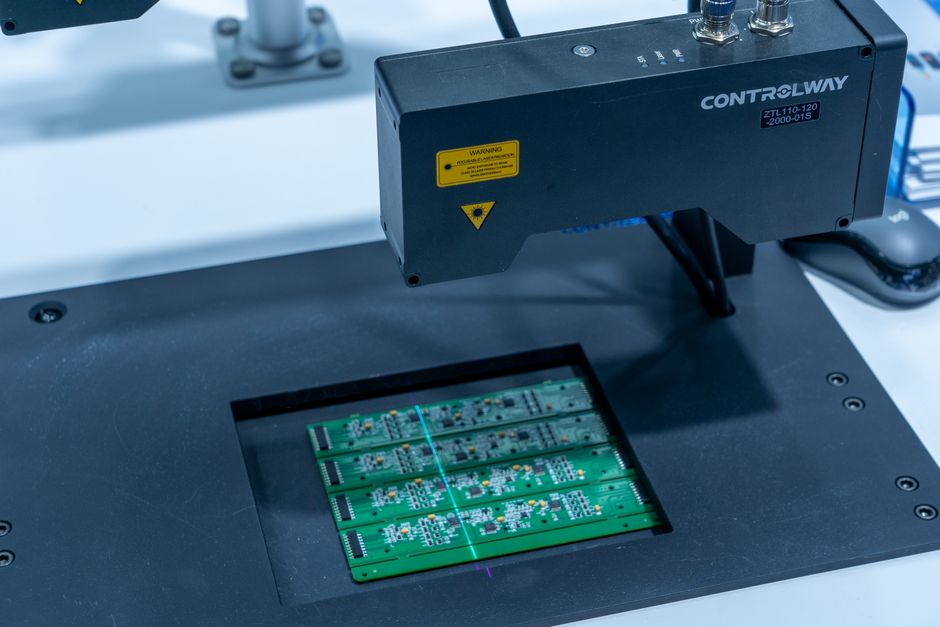
Scaling AI in Electronics Manufacturing therefore requires the same discipline applied to process qualification and design transfer. Data provenance must be demonstrable, acceptance criteria must reflect manufacturing economics, and deployment changes must be controlled. This is especially important in contract manufacturing, where one facility may run multiple customer products with different specifications, data rights, and traceability obligations. A model that performs well on a stable consumer PCBA may not transfer safely to a low-volume industrial controller with long field life and stricter failure-reporting expectations.
Choose Decisions, Not Demonstrations
The first best practice is to define the decision before selecting the technique. Statements such as predicting defects or optimizing production are too broad. A production-grade use case specifies who will act, what evidence will be available, how early the prediction arrives, and which actions are permitted. For example, an SPI risk model might instruct an SMT technician to inspect a stencil aperture and verify paste volume before additional panels are printed. A component-risk model might direct component engineering to start alternate qualification six months before projected depletion. Both are predictive applications, but their workflows, validation needs, and value horizons differ sharply.
Use a loss function that reflects factory consequences. Accuracy is usually a weak headline metric when defects are rare and costs are asymmetric. For inspection, quantify false-call labor, line interruption, destructive verification, escape risk, and downstream warranty exposure. For test analytics, distinguish a false failure that consumes retest capacity from a false pass that may reach the customer. For material continuity, compare the cost of unnecessary alternate qualification with the cost of a line-down shortage. This framing allows engineering and finance to evaluate the model using the same operational facts.
AI in Electronics Manufacturing should first target constraints that are both material and observable. Chronic solder defects, excessive AOI false calls, repeated ICT retests, slow RMA diagnosis, and high-risk component dependencies often qualify. Avoid beginning with an ambitious plant-wide optimization problem if work-order status, changeover duration, or machine states are unreliable. A narrow case with controlled inputs and a closed feedback loop creates evidence, operating confidence, and reusable infrastructure faster than a broad platform initiative.
Engineer Context Before Engineering Features
In electronics production, context is created by configuration and genealogy. Every training record should resolve to the assembly number, BOM revision, ECN or deviation status, routing, machine program, test specification, firmware version, component lot, and relevant serial or panel identifier. Without that context, a model may learn correlations caused by mixed revisions. A defect that appears associated with one supplier can actually result from a pad-stack change introduced in the same period. A test shift can reflect a limit revision rather than process deterioration. Context prevents the algorithm from turning configuration errors into misleading patterns.
Create canonical definitions for pass, fail, retest, rework, and escape. A unit that failed functional test three times and passed after component replacement is not equivalent to a first-pass unit. Preserve the sequence of events, original failure codes, measurements, repair actions, and final disposition. For inspection data, maintain human verification and repair findings rather than only the machine classification. These distinctions support useful labels and expose the hidden factory that exists between headline output and true FPY.
Feature engineering should follow the physics of the process. For solder-paste analysis, consider aperture geometry, area ratio, stencil age, paste exposure time, squeegee parameters, board support, and environmental conditions. For placement defects, include nozzle history, feeder alarms, pickup correction, component package, and machine maintenance. For reflow-related conditions, align oven profiles with board design, thermal mass, alloy, and conveyor loading. AI-Powered PCB Inspection improves when visual patterns are paired with these causal process variables rather than treated as isolated images.
Maintain lineage from source record to model output. Engineers investigating a recommendation should be able to retrieve the underlying images, measurements, timestamps, transformations, and model version. This is essential during customer audits, containment activities, and CAPA. It also enables efficient debugging when data interfaces change. Silent schema changes, unit conversions, and default values can degrade a model long before aggregate dashboards show an obvious problem.
Validate for Products, Lines, and Failure Modes
Random train-test splits are often misleading because neighboring boards share materials, programs, and process conditions. Split validation data by time, production lot, product family, or line so that testing resembles future deployment. Hold out NPI builds when evaluating a mass-production model, or test them separately. If the use case must generalize to new assemblies, validate on unseen products with comparable package and process characteristics. Report results by defect mode and operating segment, not only as one facility-wide score.
Challenge the model with known boundary conditions. Include rare packages, new suppliers, alternate components, engineering builds, maintenance events, and the edges of approved process windows. Review whether the model relies on spurious signals such as image background, fixture identity, shift code, or a timestamp associated with a previous containment. Experienced teams use ablation tests and engineering review to confirm that influential features are plausible. Statistical importance is not proof of causality, but implausible influence is a strong reason to investigate.
For Predictive SMT Quality, back-testing should reconstruct what information was actually available at the prediction time. Do not leak downstream AOI results into a prediction intended to run before placement, or final repair disposition into a model intended to guide inspection. Time leakage produces excellent offline metrics and disappointing production performance. A rigorous feature-availability matrix should state the source, latency, refresh frequency, and earliest valid use point for every input.
Acceptance testing should include workflow outcomes. Measure whether alerts arrive early enough, whether technicians understand them, whether recommended checks fit standard work, and whether dispositions are captured. Run controlled comparisons where practical. Track FPY, DPPM, rework hours, retest rate, cycle time, scrap, inspection review time, and escape performance. A model may be statistically superior yet operationally inferior if it floods the line with alerts or requires evidence that engineers cannot retrieve quickly.
Integrate AI with NPI, ECO, and Quality Controls
NPI is the most valuable and dangerous moment for learning systems. Prototype and ramp data contain early indicators, but processes, designs, materials, and limits are changing simultaneously. NPI Process Automation should preserve the state of each build: released configuration, temporary deviations, machine program, test coverage, open defects, and readiness criteria. Models can compare the new product with historical assemblies, flag risky packages or inadequate test access, and prioritize process experiments. They should not collapse engineering-build anomalies into normal production labels without review.
Establish model-impact assessment within ECO and ECN workflows. A footprint change, component alternate, firmware revision, test-limit update, or inspection-program modification can invalidate learned relationships. The change review should identify affected models, features, thresholds, and validation evidence. Some changes warrant monitoring; others require retraining or temporary suspension. This practice treats the model as a controlled manufacturing asset rather than an invisible analytics dependency.
Connect alerts to nonconformance and CAPA processes with restraint. Not every prediction should create a formal quality record, but high-risk confirmed conditions should preserve the model evidence, affected serial range, material genealogy, containment action, and verification result. When a systematic issue is found, the corrective action should address the physical or procedural cause. Retraining a model to recognize the defect is not a corrective action if the printing, placement, test, or supplier process remains unstable.
For multi-step workflows, AI agent engineering services can support agents that gather BOM records, retrieve inspection evidence, compare ECNs, and draft a containment package. Keep authority explicit: an agent may recommend a hold, prepare an ECO impact summary, or assemble an RMA history, but designated personnel should approve material disposition, specification changes, supplier actions, and production release. Log tool calls, retrieved records, generated conclusions, and human approvals so the complete sequence remains auditable.
Operate Models as Manufacturing Assets
Assign ownership across process engineering, quality, data engineering, and IT. The process owner defines intended use and response rules; quality approves acceptance and escalation criteria; data teams maintain interfaces and lineage; IT secures and supports the service. Establish a review cadence based on risk and production rate. A high-volume inspection model may require daily drift monitoring, while a component-obsolescence model may be reviewed monthly. Ownership should also cover planned downtime, fallback procedures, and recovery after interface or model failures.
Monitor input drift, output drift, and outcome drift separately. Input drift indicates that product mix, suppliers, equipment, or process distributions changed. Output drift shows that model scores or classifications shifted. Outcome drift reveals that actual defect, escape, or intervention performance changed. These signals need engineering interpretation. A score shift after a planned product transition may be expected, while a shift within a stable configuration may indicate equipment deterioration, data corruption, or an emerging defect mechanism.
Design feedback for the people doing the work. AOI reviewers should be able to correct classifications without navigating a separate analytics portal. Test technicians should record whether a recommended diagnostic step found the cause. Supplier quality engineers should capture whether a predicted risk led to a confirmed issue or a preventive qualification. High-Tech Manufacturing AI Solutions become more accurate and more trusted when feedback is specific, fast, and tied to the same serial, lot, and configuration identifiers used by production systems.
Preserve a safe fallback. If the service is unavailable or confidence falls below an approved threshold, the process should revert to validated inspection, test, or planning rules. Never make a critical release path dependent on a model without a documented contingency. For automated actions, use bounded parameters, interlocks, and rate limits. AI in Electronics Manufacturing should increase process control, not create a new uncontrolled source of recipe changes, material movement, or disposition decisions.
Scale Across Plants Without Losing Control
Standardize interfaces and evidence packages before standardizing models. Plants can share definitions for serial genealogy, defect taxonomy, BOM context, model versioning, monitoring, and approval records even when their equipment differs. A common contract for AOI findings or test measurements makes cross-site learning possible. However, differences in machine calibration, fixtures, work instructions, operator practices, supplier mix, and customer requirements may still require local validation and thresholds.
Use a federated operating model. A central team can provide secure infrastructure, reusable components, validation templates, and portfolio governance. Plant and product teams should retain authority over process meaning, readiness, and response. This arrangement avoids two common extremes: every site rebuilding the same foundation, or a central group deploying models without understanding local constraints. Companies operating at the scale of Samsung Electronics or major EMS providers need consistency, but consistency must include a disciplined method for documenting legitimate site variation.
Prioritize reusable capabilities such as image labeling, genealogy resolution, feature availability checks, drift monitoring, and approval workflows. These building blocks shorten later deployments more reliably than copying a model trained elsewhere. When transferring a model, compare population characteristics, defect prevalence, equipment, and measurement systems. Run a site-specific shadow period and require local sign-off. High-Tech Manufacturing AI Solutions should make transfer evidence visible rather than implying that a model is portable simply because two lines produce the same assembly number.
Finally, maintain a portfolio view. Retire models that no longer create value, consolidate overlapping pilots, and compare realized benefits with support cost. Track whether each capability remains tied to a production constraint. The most mature programs are not those with the largest number of models; they are those that repeatedly convert trustworthy signals into faster containment, stable ramps, higher FPY, and better product decisions.
Conclusion
AI in Electronics Manufacturing scales when practitioners treat models with the rigor applied to BOM releases, process windows, test programs, and quality systems. Define the manufacturing decision, preserve configuration and genealogy, validate against realistic products and failure modes, integrate outputs with NPI and ECO controls, and monitor the capability throughout its life. Applied this way, High-Tech Manufacturing AI Solutions can improve inspection, predict process risk, accelerate failure analysis, and strengthen production continuity while keeping engineering authority and traceability intact.


Comments
Post a Comment