AI in Automotive Manufacturing: Proven Practices for Scale
AI in Automotive Manufacturing rarely fails because an OEM cannot train a model. It fails when a technically credible model is inserted into a vehicle-development or production process without resolving data effectivity, response ownership, plant constraints, or quality accountability. Experienced practitioners should evaluate AI with the same rigor applied to a new production tool, test stand, inspection method, or supplier process. The critical questions are operational: Which decision changes, what evidence supports it, who has authority to act, how is the action traced, and what happens when the model is unavailable or wrong? Answering those questions early separates scalable capability from an isolated analytics demonstration.
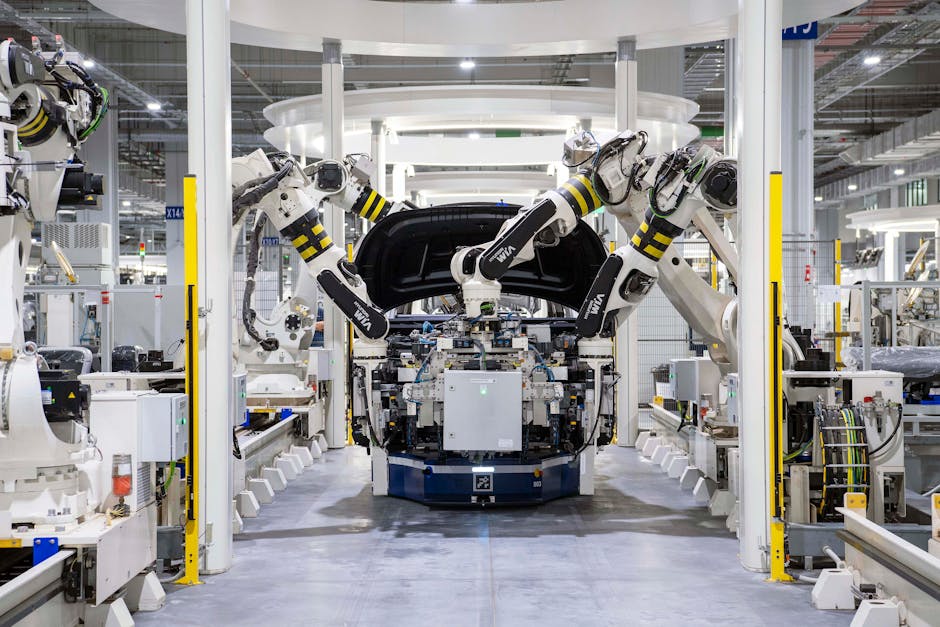
The strongest programs for AI in Automotive Manufacturing begin with process architecture rather than a list of algorithms. They identify where latency, variation, or fragmented evidence creates material exposure: a late engineering change entering a pilot build, an incomplete PPAP passing a launch gate, a recurring micro-stop reducing line output, or a warranty pattern remaining hidden across dealer narratives. They then define a controlled path from prediction to response. This approach reflects how leading OEMs and suppliers operate: Toyota-style problem solving, Bosch-level attention to production evidence, or the configuration discipline required across a global Volkswagen Group vehicle platform cannot be replaced by an attractive dashboard.
Choose Decisions, Not Generic AI Use Cases
A use case should be expressed as a decision made by a named role under defined conditions. Predictive maintenance is too broad. Recommending whether a specific paint-shop circulation pump should be serviced during the next planned stop, using vibration, temperature, pressure, and work-order history, is actionable. Quality prediction is also too broad. Ranking bodies for additional dimensional inspection after a tooling event, while preserving the approved control plan, defines a real intervention. This precision exposes the necessary inputs, timing, authority, and downstream cost.
Prioritization should consider value, feasibility, and process readiness together. High warranty cost may suggest a field-quality model, but weak VIN genealogy can prevent reliable linkage from claims to component lots and software versions. Severe downtime may suggest condition monitoring, but inconsistent fault codes can make training data unusable. AI in Automotive Manufacturing delivers faster returns where the plant or engineering team already has a stable response process and needs earlier, better-targeted information. Automating an undefined escalation path usually magnifies confusion.
Set a counterfactual baseline before the pilot begins. Record how the current process performs by shift, product family, station, supplier, or vehicle program. Suitable measures include false reject rate, time to containment, repeat failures, OEE loss, FPY, scrap, premium freight, warranty incidence, and engineering hours spent reconciling changes. For each recommended action, capture whether the practitioner accepted it and what happened afterward. This creates evidence of decision quality rather than relying on model accuracy measured against a historical label of uncertain quality.
Engineer Data Around Revision, Genealogy, and Context
Automotive data is meaningful only within its production and engineering context. A torque value needs the tool, calibration state, program version, fastener, joint, station, timestamp, and VIN or carrier identity. A dimensional result needs the fixture, measurement system, drawing revision, material lot, and environmental conditions. A software diagnostic needs the electronic control unit, calibration, variant coding, and test-sequence version. Omitting this context allows models to confuse configuration changes with process drift.
Effectivity is especially important as electronic and battery architectures grow more complex. ECR and ECO records may specify implementation by date, serial number, plant, supplier, or VIN breakpoint. The physical change can lag the administrative release because old stock remains in the pipeline. AI in Automotive Manufacturing should use as-built genealogy rather than assume the latest BOM represents every vehicle on the line. For field analysis, as-maintained configuration may also differ from as-built status after dealer software updates or replacement parts.
Create data-quality checks that reflect automotive failure modes. Look for impossible station sequences, duplicated serial numbers, measurements captured under obsolete specifications, supplier lots received before their recorded production date, and test results assigned to an invalid configuration. Monitor label distribution by plant and shift; a sudden reduction in coded failures may mean a reporting change rather than an actual improvement. Data stewards from manufacturing engineering, supplier quality, systems engineering, and warranty should approve the meaning of critical fields instead of delegating semantics entirely to a central analytics team.
Embed AI-Powered APQP in Existing Quality Gates
AI-Powered APQP works best as a continuous evidence review across program milestones. A model can compare customer and regulatory requirements with design FMEAs, process FMEAs, drawings, special characteristics, control plans, validation reports, measurement-system analyses, capability studies, and PPAP submissions. The objective is not to generate a compliant document set automatically. It is to identify gaps, contradictions, and aging assumptions early enough for the responsible engineer or supplier quality manager to resolve them before tooling release or start of production.
Use risk-based alerts rather than indiscriminate document commentary. A changed safety-related characteristic missing from a control plan deserves immediate escalation. A stylistic difference between two low-risk descriptions does not. Configure thresholds by program phase, component criticality, supplier maturity, and evidence type. Maintain source references so reviewers can open the exact revision and section behind every finding. If a recommendation cannot be traced to controlled evidence, it should not influence a formal quality gate.
Supplier Quality AI should also distinguish document completeness from process readiness. A supplier may submit every required PPAP element while capacity, tooling robustness, sub-tier continuity, or safe-launch staffing remains weak. Combine submission evidence with run-at-rate results, open 8D actions, change history, delivery performance, capacity utilization, and sub-tier exposure. When risk rises, trigger a defined response such as an on-site process review, layered audit, additional containment, or revised recovery plan. The supplier quality engineer remains accountable for disposition and customer communication.
Design Plant Models for Real Production Constraints
Plant models must respect takt, buffers, rework capacity, maintenance access, and sequence dependencies. A recommendation that maximizes one machine’s output can starve or block the rest of the line. In the body shop, robot and weld-gun interventions must consider accumulated buffer and model mix. In paint, environmental adjustments can affect cure, appearance, emissions, and energy consumption. In final assembly, sending too many vehicles to offline repair can protect FPY reporting while creating congestion and delayed shipment. Optimization objectives should therefore represent end-to-end throughput and quality, not one local metric.
Automotive Production AI needs a defined reaction plan for each alert class. A predicted bearing failure may prompt inspection at the next micro-break, a planned component change during scheduled maintenance, or an immediate controlled stop depending on confidence and consequence. A vision system detecting a missing connector should route the unit to verified repair and preserve the image, model version, and inspection result against the VIN. Operators need clear instructions and a simple way to challenge incorrect recommendations. Those challenges are valuable process signals, not user resistance to be hidden.
Validate models across shifts, variants, seasonal conditions, planned shutdowns, and known process changes. Ford or General Motors plants producing several configurations on one line cannot assume performance measured on the dominant variant applies to low-volume combinations. Run shadow mode long enough to observe rare but consequential states. Compare the model with experienced operators and existing alarms, and examine false negatives by severity. Release only when the combined technical and process controls meet an agreed acceptance plan.
Build Closed-Loop Quality and Agent Governance
A mature implementation connects in-line inspection, end-of-line testing, containment, and field quality. If end-of-line results drift for a particular configuration, the system should help trace related stations, component lots, software versions, and upstream measurements. If dealer claims describe an emerging symptom, natural-language analysis can cluster narratives and identify affected VIN populations. The resulting hypothesis should enter the established defect-containment and 8D process, where teams verify the failure mode, root cause, corrective action, and effectiveness.
Agent-based workflows can accelerate evidence gathering across PLM, QMS, MES, ERP, maintenance, and warranty systems. When selecting an automotive AI agent developer, require role-based access, immutable activity records, source-level citations, approval gates, timeout behavior, and rollback. An agent preparing a launch review may assemble missing PPAP items and draft follow-up actions, but it should not approve a supplier submission. An agent investigating a field issue may propose a suspect population, but quality and safety leaders must authorize containment or recall decisions.
AI in Automotive Manufacturing also needs formal model-change control. Record training data, feature definitions, model version, validation scope, thresholds, integrations, and intended use. Treat a material model or prompt change like a controlled production change: assess impact, test in a representative environment, approve release, and retain a rollback path. Monitor drift in both inputs and outcomes. A stable accuracy figure can conceal degradation if product mix, supplier source, inspection policy, or failure coding has changed.
Scale Through Platforms Without Erasing Plant Knowledge
Scaling requires shared technical foundations and local process ownership. Common services should handle identity, access, lineage, deployment, monitoring, approved model components, and connection patterns. Plants and vehicle programs should own process validation, reaction plans, acceptance criteria, and ongoing performance. This federated model avoids two familiar problems: every site building an incompatible stack, or a central team deploying models that ignore line-specific constraints and engineering history.
High-Tech Manufacturing AI provides useful architectural patterns for complex BOMs, fast product revisions, electronics testing, and equipment-rich factories. Automotive organizations must extend those patterns with VIN genealogy, JIT and JIS sequencing, PPAP evidence, safety escalation, dealer feedback, and regulatory traceability. Standardize what is genuinely reusable, such as access controls and monitoring, while allowing a machining plant, battery facility, and final assembly plant to define different features and intervention rules.
Use a portfolio review to prevent pilot sprawl. Retire models that do not change decisions, merge overlapping applications, and prioritize capabilities that reuse governed data products. A vehicle configuration service, for example, can support change-impact analysis, end-of-line test selection, warranty segmentation, and dealer service planning. A shared supplier identity and part-genealogy layer can support launch risk, inbound containment, and field tracing. Reuse at the data and control level creates more durable scale than reproducing similar dashboards across plants.
Sustain Performance Through Workforce and Process Discipline
Experienced operators, manufacturing engineers, supplier quality engineers, and field investigators should participate throughout design and validation. Their knowledge reveals hidden states in the data: an alarm used as a workaround, a measurement taken only after repair, a supplier code that changed after nomination, or a test rerun that overwrote the original failure. Incorporating this knowledge improves the model and clarifies where the underlying process itself needs correction.
High-Tech Manufacturing AI should be accompanied by role-specific training. Operators need to understand what an alert means and how to respond. Engineers need methods for testing model behavior across configurations. Quality leaders need evidence suitable for audits and corrective-action reviews. Executives need portfolio measures tied to launches, throughput, quality, working capital, and warranty exposure. No group needs a generic lecture on algorithms when the real requirement is competent use within its automotive responsibilities.
The final best practice is to preserve structured learning. Review accepted and rejected recommendations, response delays, false alarms, escapes, and unintended consequences. Feed confirmed field root causes back into FMEA and control-plan updates. Feed plant failure patterns into preventive maintenance and design-for-manufacturing reviews. Feed supplier launch lessons into future nomination criteria. This closed loop turns AI from a collection of point solutions into an institutional capability that improves with every vehicle program.
Conclusion
Scaling AI in Automotive Manufacturing requires the same habits that support a strong launch: explicit ownership, controlled changes, representative validation, traceable evidence, and disciplined reaction plans. Start from high-value decisions, engineer data around actual revisions and genealogy, embed recommendations in APQP and plant workflows, and govern agents and models as production assets. For OEMs and Tier 1 suppliers building a reusable foundation, High-Tech Manufacturing AI offers a useful path for connecting complex-product intelligence with the automotive controls needed to protect safety, quality, throughput, and launch timing.


Comments
Post a Comment