How a Global Logistics Provider Achieved 67% Efficiency Gains with Ambient Agents
In early 2025, a global logistics provider operating across 47 countries faced a crisis that threatened its competitive position. Order volumes had increased 230% over three years while profit margins compressed due to rising labor costs and intensifying competition. The company's operational model—built on centralized planning teams making thousands of daily routing, scheduling, and allocation decisions—couldn't scale to meet demand. Peak periods saw decision backlogs extending 18 hours, resulting in delayed shipments, missed commitments, and customer defections. Traditional automation had delivered incremental improvements but failed to address the fundamental challenge: dynamic optimization across constantly shifting variables in real-time.
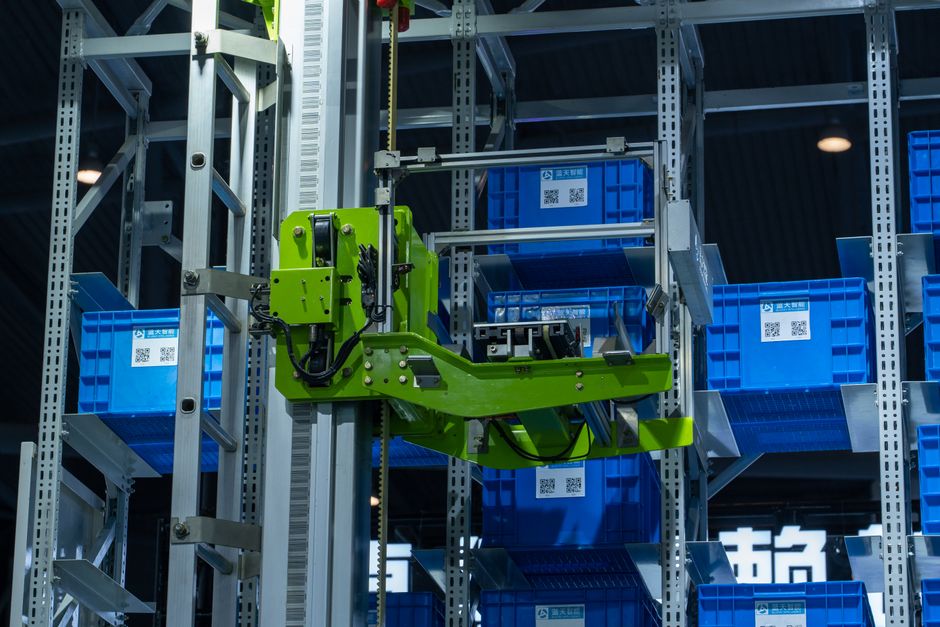
The solution the company implemented represents one of the most comprehensive deployments of Ambient Agents in the logistics sector to date. Over eighteen months, they deployed an interconnected ecosystem of autonomous agents handling route optimization, capacity allocation, exception management, and dynamic re-planning. The results exceeded initial projections: 67% improvement in operational efficiency, 43% reduction in decision latency, 89% decrease in human intervention requirements for routine decisions, and a 34% improvement in on-time delivery performance. Beyond metrics, the implementation fundamentally transformed how the organization operates, shifting human effort from repetitive decision-making to strategic planning and exception handling.
The Business Challenge: Complexity Beyond Human Scale
The company's operational complexity stemmed from the combinatorial explosion of variables requiring simultaneous optimization. Each day, planners needed to route 14,000+ shipments across networks spanning air, ocean, rail, and ground transportation. Each shipment had unique characteristics: size, weight, destination, priority level, temperature sensitivity, regulatory requirements, and customer-specific delivery windows. Transportation capacity fluctuated based on carrier availability, weather conditions, geopolitical events, and competing demand. Cost structures varied by mode, carrier, route, and volume commitments.
Traditional optimization software could handle individual dimensions but struggled with dynamic re-optimization as conditions changed. A weather delay affecting air capacity would cascade through the network, requiring replanning dozens of shipments and rebalancing capacity allocations. Human planners spent 70% of their time on routine decisions following established logic and 30% on genuine exceptions requiring judgment. The ratio was economically unsustainable and strategically problematic, as top talent focused on repetitive tasks rather than continuous improvement and strategic partnerships.
Previous automation initiatives had automated data entry, standardized workflow steps, and implemented rule-based routing for simple shipments. These delivered 15-20% efficiency gains but hit diminishing returns. The remaining complexity required contextual decision-making that traditional if-then logic couldn't accommodate. The company needed systems capable of understanding current state across multiple dimensions, applying sophisticated optimization logic, making autonomous decisions within defined parameters, and adapting to changing conditions continuously.
The Solution Architecture: An Ecosystem of Specialized Agents
Rather than attempting to build a monolithic system, the company designed an ecosystem of specialized Ambient Agents, each responsible for specific decision domains but capable of coordinating through shared context and communication protocols. The architecture included five primary agent types, each with distinct responsibilities and decision rights.
Route Optimization Agents analyzed each shipment's characteristics and constraints, evaluated available transportation options, calculated cost-time-reliability trade-offs, and selected optimal routes. These agents operated continuously, reassessing routes as conditions changed and initiating replanning when original plans became suboptimal. They interfaced with carrier systems to access real-time capacity and pricing data, weather services to anticipate disruptions, and the company's commitment database to ensure contractual obligations were met.
Capacity Allocation Agents managed the company's transportation capacity across contracted carriers and spot markets. They forecast demand patterns based on historical trends and current bookings, allocated capacity to high-priority shipments, and identified when spot market purchases were economically justified. These agents balanced competing objectives: minimizing costs, ensuring capacity availability for priority customers, and maintaining relationships with preferred carriers through consistent volume commitments.
Exception Management Agents monitored shipments in transit, detected deviations from plan (delays, damage reports, documentation issues), assessed impact and urgency, and either resolved issues autonomously or escalated to human operators based on complexity and business impact. For routine exceptions—a minor delay requiring customer notification—agents handled end-to-end resolution. For complex situations—damaged high-value cargo requiring insurance claims and customer negotiation—agents prepared situation summaries and recommended actions for human decision-makers.
Dynamic Replanning Agents detected situations requiring systematic replanning: major weather events, carrier capacity failures, geopolitical disruptions affecting specific routes. When triggered, these agents coordinated with Route Optimization and Capacity Allocation agents to replan affected shipments, rebalance capacity allocations, and update customer commitments. This intelligent orchestration enabled the system to respond to disruptions in minutes rather than hours, minimizing cascade effects and customer impact.
Customer Communication Agents managed proactive outreach to customers regarding shipment status, delays, and delivery updates. They determined what communications were needed based on shipment status changes, selected appropriate communication channels based on customer preferences, and personalized messaging based on customer relationship history. For routine updates, agents sent notifications autonomously. For situations likely to generate customer concern, agents drafted communications for human review before sending.
Implementation Journey: Phased Deployment and Continuous Refinement
The implementation followed a deliberate phased approach designed to manage risk, enable organizational learning, and build confidence before expanding scope. Phase One focused on Route Optimization Agents for domestic ground shipments—the highest volume, lowest complexity segment. The company selected three regional hubs representing diverse operational conditions and deployed agents to handle route selection for standard shipments meeting specific criteria: weight under 500kg, non-hazardous, single-destination, and standard delivery windows.
This limited deployment enabled the technical team to validate system performance, identify integration issues, and refine agent decision logic based on real operational feedback. Human planners continued handling complex shipments while monitoring agent decisions and providing feedback. After three months, agent-selected routes matched or exceeded human planner efficiency in 94% of cases, with the 6% exceptions primarily involving situations requiring knowledge of informal carrier relationships not captured in system data.
Phase Two expanded Route Optimization Agents to include air and ocean shipments while introducing Capacity Allocation Agents for ground transportation. This phase introduced significantly more complexity: longer planning horizons, more volatile pricing, and greater impact of capacity allocation decisions on overall economics. The implementation revealed the importance of Enterprise Orchestration between agent types—Route Optimization Agents needed real-time visibility into Capacity Allocation decisions to make optimal routing choices, requiring tight integration between agent systems.
The company invested four months in Phase Two, deliberately slowing deployment pace to ensure robust inter-agent communication and handle edge cases that emerged only under production volumes. A critical incident occurred six weeks into Phase Two when conflicting optimization logic between Route Optimization and Capacity Allocation Agents created a feedback loop that overbooked capacity on a high-demand route. The incident was resolved within hours through manual intervention, but it highlighted the need for hierarchical decision frameworks and conflict resolution protocols that became a focus area for the technical team.
Phase Three introduced Exception Management and Dynamic Replanning Agents while expanding Route Optimization and Capacity Allocation to cover all shipment types. This phase represented full production deployment, with agents handling the majority of routine decisions and human operators focusing on exceptions and strategic planning. Organizational change management became critical during this phase, as the shift from human-centric to agent-centric operations required new workflows, different skill sets, and cultural adaptation to trusting autonomous systems.
The company invested heavily in training programs helping planners transition from executing decisions to overseeing agent performance, handling escalated exceptions, and continuously improving system logic. They created an Agent Performance team responsible for monitoring decision quality, analyzing patterns in agent behavior, and implementing refinements to improve outcomes. This team became crucial to sustaining value, as agent effectiveness improved continuously based on accumulated operational experience and deliberate optimization efforts.
Results and Business Impact: Transformation Across Multiple Dimensions
The measurable business impact exceeded initial projections across operational, financial, and strategic dimensions. Operational efficiency improved 67% as measured by decisions processed per planner per day. Before implementation, planners averaged 180 routing decisions daily. Post-implementation, with agents handling routine decisions, the same planners oversaw 3,000+ agent decisions daily while personally resolving 120 complex exceptions requiring human judgment. This productivity transformation enabled the company to absorb 230% volume growth without proportional headcount increases.
Decision latency—time from shipment booking to routing finalization—dropped 43%, from an average of 4.2 hours to 2.4 hours. For time-sensitive shipments, agent-enabled decision-making reduced latency to under 15 minutes, enabling the company to accept bookings closer to departure times and capture business that previously went to competitors. Peak period performance improved dramatically, with decision backlogs that previously extended 18 hours reduced to under 90 minutes even during the busiest operational periods.
On-time delivery performance improved from 84.3% to 91.7%, driven primarily by faster exception response and more effective dynamic replanning when disruptions occurred. The Exception Management Agents' ability to detect and respond to potential delays hours before human operators would have noticed enabled proactive intervention that kept shipments on schedule. Customer satisfaction scores improved correspondingly, with Net Promoter Score increasing from 42 to 58 over the implementation period.
Financial impact came through multiple channels. Direct labor costs per shipment declined 38% despite wage increases, as productivity gains outpaced compensation growth. Transportation costs per shipment dropped 12% through superior route optimization and more effective capacity allocation. The company reduced spot market purchases by 23% through better demand forecasting and proactive capacity management, while simultaneously improving service levels. Combined impact delivered $127 million in annual cost savings and revenue protection against a total investment of $31 million over eighteen months, achieving ROI in under six months post-deployment.
Critical Success Factors: What Made the Difference
Several factors distinguished this implementation from less successful agent deployments observed in the industry. First, the company treated data infrastructure as a strategic priority from day one. They invested six months before agent deployment in building a unified operational data platform integrating shipment data, carrier systems, tracking information, weather services, and customer databases. This platform provided agents with reliable, timely, consistent information essential for quality decision-making. Competitive implementations that attempted to deploy agents on top of fragmented data environments struggled with poor performance and erratic behavior.
Second, the company established clear governance frameworks defining agent decision rights, escalation criteria, and override procedures before deployment. They created explicit policies specifying what decisions agents could make autonomously versus what required human approval. They implemented comprehensive logging capturing agent decision rationale, enabling post-decision review and continuous improvement. They built circuit breakers that automatically paused agent activity when anomalies were detected, preventing small issues from escalating into major incidents. These governance mechanisms built organizational confidence in agent reliability and provided safety nets when unexpected situations emerged.
Third, the phased implementation approach enabled organizational learning and system refinement before expanding scope. By starting with limited deployment in controlled environments, the company identified and resolved issues when they had limited business impact. Each phase generated insights that improved subsequent phases, creating a positive learning trajectory. Organizations that attempt big-bang deployments across entire operations simultaneously face higher risk and limited ability to course-correct when problems emerge.
Fourth, comprehensive change management ensured organizational readiness and user adoption. The company involved planners in agent design, collected feedback continuously, celebrated successes publicly, and invested in training that built confidence in working alongside autonomous systems. They created career development paths for planners transitioning from execution to oversight roles, addressing concerns about job security and demonstrating that Continuous Automation enhanced rather than eliminated human value. Organizations that neglect the people dimension of implementation face resistance that undermines technical success.
Lessons Learned: Insights for Future Implementations
The implementation generated valuable lessons applicable to organizations considering similar deployments. The most fundamental: ambient intelligence succeeds when positioned as augmentation rather than replacement. The company's most significant value came not from eliminating human involvement but from enabling humans to focus on high-value activities while agents handled high-volume routine decisions. Implementations that position agents as human substitutes create resistance and miss opportunities for human-agent collaboration that exceeds either capability alone.
Second, inter-agent coordination complexity exceeds individual agent complexity as primary implementation challenge. Building individual agents with solid decision logic proved straightforward. Ensuring multiple agents coordinated effectively, resolved conflicts gracefully, and optimized for system-level rather than local objectives required sophisticated orchestration logic and extensive testing. Organizations should invest significant design effort in agent interaction protocols, conflict resolution mechanisms, and system-level optimization frameworks.
Third, ongoing optimization matters more than initial deployment perfection. The company's agents delivered acceptable but not exceptional results initially. Sustained value came from continuous refinement based on operational experience: tuning decision parameters, expanding decision rules to handle edge cases, improving inter-agent coordination, and incorporating user feedback. Organizations should plan for agent operations as ongoing practice requiring dedicated resources rather than one-time projects with fixed completion dates.
Conclusion: The Path to Intelligent Operations
This case study demonstrates that properly implemented Ambient Agents can deliver transformational business impact across operational efficiency, service quality, and financial performance. The 67% efficiency improvement, 43% latency reduction, and $127 million in annual value creation represent not theoretical potential but measured results from production deployment at enterprise scale. Success required significant investment in data infrastructure, governance frameworks, phased implementation, and change management—prerequisites that organizations must address rather than shortcut.
The implementation also illustrates how ambient intelligence extends beyond single-use cases to enable entirely new operational models. The logistics provider didn't simply automate existing processes; they fundamentally reimagined how operations function when intelligent systems provide continuous optimization and exception management. This transformation positions the company to scale operations profitably while improving service quality, creating sustainable competitive advantage in a margin-compressed industry. Organizations exploring similar capabilities in specialized domains like Sales Proposal Automation can apply these lessons: invest in foundations, implement deliberately, govern rigorously, enable users effectively, and commit to continuous optimization. The path to ambient intelligence is neither quick nor simple, but for organizations willing to make the investment, the competitive and financial returns justify the effort.


Comments
Post a Comment