Continuous Ambient Intelligence Success: How a Manufacturer Achieved 34% Efficiency Gains
In the competitive landscape of modern manufacturing, the difference between industry leadership and obsolescence often comes down to operational efficiency and the ability to anticipate problems before they impact production. For GlobalTech Manufacturing, a mid-sized producer of precision automotive components with operations across three continents, this reality became increasingly apparent as they faced mounting pressure from competitors who were leveraging advanced technologies to optimize their operations. Their transformation journey offers valuable insights into how strategic implementation of intelligent systems can deliver measurable, sustained improvements across complex manufacturing environments.
GlobalTech's leadership recognized that traditional approaches to production monitoring and quality control were no longer sufficient. They needed systems that could operate continuously, adapting to changing conditions and providing real-time insights that enabled proactive decision-making. After extensive evaluation, they committed to a comprehensive deployment of Continuous Ambient Intelligence across their flagship facility in Stuttgart, Germany, with plans to expand to additional locations based on results. What followed was an 18-month implementation that transformed their operations and established new benchmarks for manufacturing excellence.
The Challenge: Reactive Operations and Hidden Inefficiencies
Before embarking on their transformation journey, GlobalTech faced challenges common to many manufacturing organizations. Their production lines operated with traditional programmable logic controllers and scheduled maintenance protocols that, while functional, left significant opportunities for optimization unrealized. Quality inspections occurred at discrete checkpoints rather than continuously, meaning defects were often detected late in the production process, resulting in waste and rework.
Equipment failures, while infrequent, had outsized impacts on production schedules. A single unexpected breakdown could cascade through the production schedule, delaying shipments and requiring expensive overtime to recover. The company estimated that unplanned downtime cost approximately €2.3 million annually across their Stuttgart facility alone, not accounting for the secondary impacts on customer relationships and contract penalties.
Establishing the Baseline
GlobalTech's transformation team began by establishing comprehensive baseline metrics across five key dimensions: overall equipment effectiveness (OEE), first-pass yield, energy consumption, unplanned downtime, and safety incident rates. Their initial assessment revealed sobering realities:
- Overall Equipment Effectiveness averaged 67%, well below the manufacturing industry target of 85%
- First-pass yield stood at 91.2%, with 8.8% of production requiring rework or being scrapped
- Energy costs represented 14% of total production costs, with significant variation across different shifts and production runs
- Unplanned downtime averaged 127 hours per month across all production lines
- Safety incidents, while minor, occurred at a rate of 3.4 per month, primarily related to material handling and equipment operation
The Solution: Comprehensive Continuous Ambient Intelligence Deployment
Working with technology partners specializing in intelligent automation solutions, GlobalTech designed a multi-layered implementation that would transform their manufacturing environment into a self-aware, continuously optimizing system. The architecture comprised three integrated layers working in concert to monitor, analyze, and act on information flowing through the production environment.
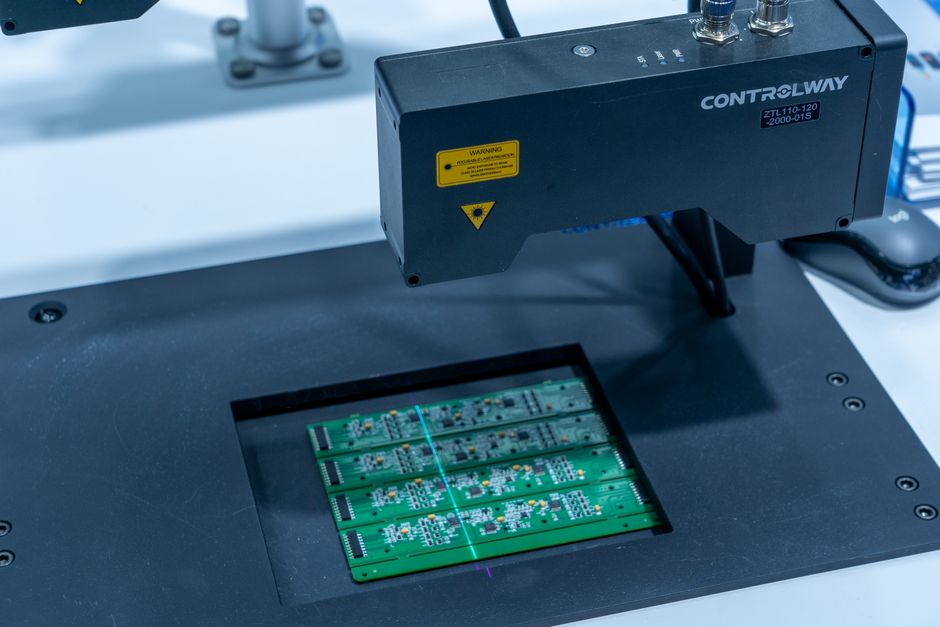
The sensor layer included over 3,400 individual sensors deployed across production equipment, environmental monitoring points, and material flow pathways. These ranged from vibration sensors on critical rotating equipment to thermal imaging systems monitoring production quality in real-time, acoustic sensors detecting anomalous sounds indicating potential equipment issues, and computer vision systems performing continuous quality inspection at multiple points in the production process.
Intelligence and Analytics Infrastructure
The edge computing layer processed sensor data locally, enabling real-time decision-making without dependence on cloud connectivity. Forty-seven edge computing nodes, each serving a specific production cell or equipment cluster, ran machine learning models that detected anomalies, predicted equipment failures, and optimized process parameters continuously. This distributed architecture reduced latency to under 50 milliseconds for critical control decisions, enabling responsive adjustments that simply weren't possible with centralized processing.
The central analytics platform aggregated insights from edge systems, identified cross-functional optimization opportunities, and managed the continuous learning process that improved system performance over time. This layer employed advanced techniques from the AI Development Process including reinforcement learning for process optimization, deep neural networks for quality prediction, and natural language processing to make insights accessible to operators and managers through conversational interfaces.
Implementation Approach: Phased Deployment and Continuous Learning
GlobalTech wisely rejected a "big bang" implementation approach in favor of a phased deployment that allowed for learning, adjustment, and capability building. The implementation unfolded across four quarters, each focusing on specific production areas and capabilities while building toward comprehensive coverage.
Quarter one focused on predictive maintenance for critical equipment. The team instrumented ten high-value machines representing the most significant downtime risk, deployed edge processing capabilities, and began collecting data to train predictive models. Initial models relied on vendor-provided algorithms, but these were quickly supplemented with custom models trained on GlobalTech's specific operating conditions and equipment configurations.
By quarter two, the scope expanded to include quality monitoring and process optimization. Computer vision systems began performing inline inspection of components, detecting defects that human inspectors frequently missed. The Continuous Ambient Intelligence system began making autonomous adjustments to process parameters—temperature, pressure, feed rates—optimizing for quality and efficiency based on real-time conditions.
Scaling and Integration
Quarters three and four focused on scaling successful applications across the entire facility and integrating discrete systems into a unified intelligence layer. The team addressed integration challenges, refined human-machine interfaces, and established governance processes for the increasingly autonomous systems making decisions across the production environment. Change management intensified during this phase as operators adapted to new roles focused on exception handling and continuous improvement rather than routine monitoring and manual adjustments.
- Month 1-3: Predictive maintenance pilot on critical equipment, baseline data collection
- Month 4-6: Quality monitoring systems deployment, initial process optimization capabilities
- Month 7-9: Facility-wide sensor deployment, edge computing network expansion
- Month 10-12: Full integration, autonomous optimization activation, operator training completion
- Month 13-18: Refinement, performance optimization, preparation for multi-site expansion
Results: Quantifiable Transformation Across Key Metrics
Eighteen months after initiating the deployment, GlobalTech conducted a comprehensive assessment comparing performance against the established baseline. The results exceeded even optimistic projections, demonstrating the substantial value that Continuous Ambient Intelligence can deliver when implemented thoughtfully and comprehensively.
Overall Equipment Effectiveness improved from 67% to 89.3%, a 33.3% relative improvement. This gain resulted from reduced downtime, faster changeovers enabled by automated setup optimization, and improved quality reducing the time lost to rework. The improvement translated directly to increased production capacity, enabling GlobalTech to accept additional orders without capital investment in new equipment.
Quality and Efficiency Improvements
First-pass yield increased from 91.2% to 97.8%, reducing scrap and rework costs by €847,000 annually. The continuous quality monitoring enabled by ambient intelligence detected subtle variations before they resulted in defects, allowing for proactive corrections that maintained quality without interrupting production. Customer complaints related to quality decreased by 76%, strengthening relationships and reducing warranty costs.
Unplanned downtime fell from 127 hours per month to 31 hours per month, a 76% reduction. Predictive maintenance enabled by continuous equipment monitoring allowed the team to address developing issues during scheduled maintenance windows rather than responding to unexpected failures. The financial impact was dramatic: unplanned downtime costs decreased from €2.3 million annually to approximately €580,000, a savings of €1.72 million.
Energy consumption decreased by 18% per unit produced, achieved through continuous optimization of equipment operation, improved scheduling that reduced idle time, and better coordination between production stages that eliminated wasteful startup and shutdown cycles. This represented annual savings of approximately €340,000 while also advancing the company's sustainability objectives.
Lessons Learned: Critical Success Factors
GlobalTech's transformation journey yielded important lessons applicable to any organization pursuing Enterprise Operations Transformation through ambient intelligence. Perhaps most importantly, leadership commitment proved essential throughout the implementation. The project faced skepticism, technical challenges, and moments when ROI seemed uncertain. Sustained executive support ensured resources remained available and signaled organizational commitment that influenced adoption at all levels.
The phased approach, while requiring patience, proved crucial to success. Early phases built expertise, identified integration challenges, and generated early wins that built momentum. Attempting comprehensive deployment without this learning period would likely have resulted in significant setbacks and compromised the overall success.
The Human Element
Change management received insufficient attention initially and required mid-course correction. Operators skeptical of automation needed reassurance that the technology augmented rather than replaced their expertise. Investing in comprehensive training, creating opportunities for operators to contribute to system refinement, and celebrating their expanding roles as system supervisors rather than manual controllers eventually transformed skeptics into advocates.
Data quality emerged as a continuous challenge rather than a one-time fix. The team established ongoing data governance processes, appointed data stewards for different functional areas, and invested in tools that flagged quality issues automatically. This continuous attention to data integrity ensured that models remained accurate and insights remained trustworthy.
Conclusion: A Roadmap for Manufacturing Excellence
GlobalTech Manufacturing's journey demonstrates that Continuous Ambient Intelligence represents far more than incremental improvement—it enables fundamental transformation in how manufacturing operations function. The 34% efficiency gain, quality improvements, and dramatic reduction in unplanned downtime delivered financial returns that exceeded initial projections while positioning the company for continued competitive advantage.
As GlobalTech expands the deployment to additional facilities worldwide, they're building on lessons learned and accelerating implementation timelines. The Stuttgart facility serves as a living laboratory, continuously refining approaches and identifying new optimization opportunities. The company has become an industry reference, hosting site visits for peer organizations seeking to understand how ambient intelligence can transform manufacturing operations. As development approaches evolve, methodologies like Vibe Coding are further streamlining how organizations build and deploy intelligent systems, making these transformative capabilities more accessible to manufacturers of all sizes. For organizations contemplating similar transformations, GlobalTech's experience offers both inspiration and a practical roadmap, demonstrating that with careful planning, sustained commitment, and attention to both technical and human factors, the promise of Continuous Ambient Intelligence can become operational reality.


Comments
Post a Comment