Intelligent Automation in Production: A Complete Starter Guide
The automotive manufacturing landscape has reached a critical inflection point where traditional production methods can no longer satisfy the mounting pressures of rising labor costs, tightening regulatory standards, and accelerating innovation cycles. Assembly lines that once relied primarily on manual inspection and mechanical tooling now face demands for real-time quality assurance, predictive maintenance scheduling, and adaptive production workflows that respond instantly to supply chain fluctuations. For manufacturers new to advanced automation strategies, understanding how modern intelligent systems differ from legacy programmable logic controllers represents the essential first step toward remaining competitive in an industry where Ford, Toyota, and Volkswagen are continuously refining their operational technologies to achieve unprecedented efficiency gains.
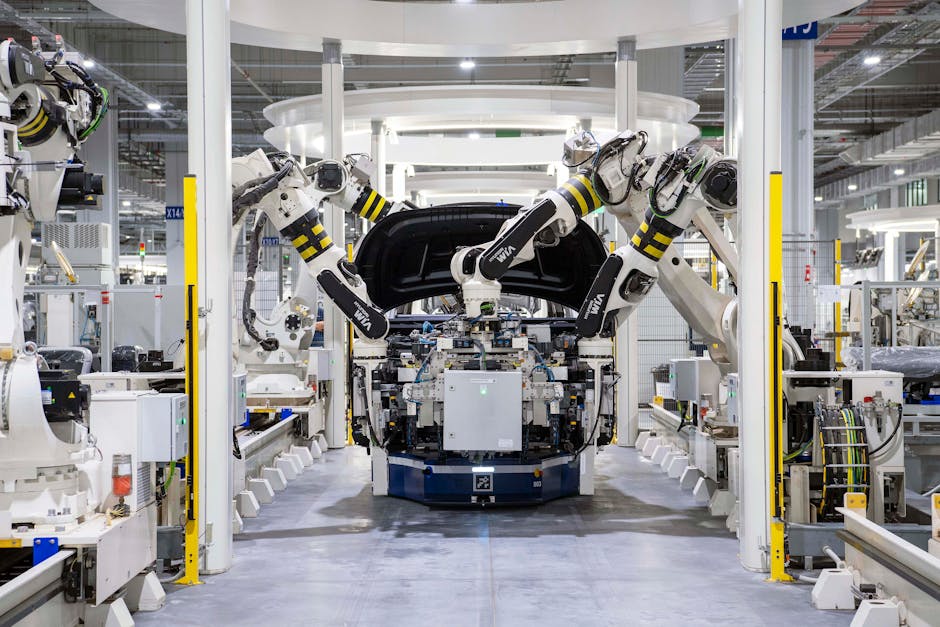
At its core, Intelligent Automation in Production combines machine learning algorithms, computer vision systems, and cognitive decision engines with physical automation equipment to create manufacturing environments that learn from production data and optimize themselves without constant human intervention. Unlike conventional automation that executes pre-programmed sequences regardless of contextual factors, intelligent systems continuously analyze variables such as material quality variations, equipment performance degradation, and demand fluctuations to adjust parameters dynamically. This fundamental shift enables production lines to move beyond rigid cycle times toward flexible, self-correcting workflows that maintain quality targets even when upstream suppliers deliver components with minor specification drift or when equipment begins showing early signs of wear that would escape traditional scheduled maintenance protocols.
Understanding the Foundation: What Makes Automation Intelligent
The distinction between conventional automation and intelligent automation lies primarily in the decision-making architecture embedded within the system. Traditional robotic cells in automotive body shops execute welding sequences based on fixed positional coordinates and timing parameters defined during commissioning. While these systems deliver remarkable consistency for high-volume production runs, they cannot adapt when parts arrive with dimensional variations that fall within tolerance but still affect optimal weld positioning. Intelligent Automation in Production addresses this limitation by integrating sensor feedback loops with adaptive algorithms that calculate optimal tool paths in real time based on actual part geometry rather than nominal CAD specifications.
Manufacturing Intelligence Systems form the analytical backbone of these adaptive capabilities, aggregating data streams from quality sensors, process controllers, ERP systems, and MES platforms to build comprehensive digital models of production operations. These models enable predictive analytics that forecast equipment failures days or weeks before breakdowns occur, allowing maintenance teams to schedule interventions during planned downtime rather than responding to emergency stops that cascade through multi-tier supply chains. For organizations beginning their automation journey, establishing robust data infrastructure represents the critical prerequisite—sensors and connectivity must capture ground truth from the factory floor before algorithms can generate actionable insights.
The Technology Stack Behind Modern Systems
A complete intelligent automation architecture typically comprises five integrated layers. The physical layer includes industrial robots, automated guided vehicles, collaborative robots (cobots), and smart tooling equipped with force-torque sensors and vision systems. The connectivity layer employs industrial ethernet protocols, edge computing nodes, and secure gateways that aggregate data while maintaining cybersecurity boundaries. The analytics layer processes this data using machine learning models trained on historical production patterns, quality outcomes, and maintenance records. The orchestration layer coordinates workflows across multiple production cells and manages material flow based on current demand signals and inventory positions. Finally, the interface layer provides operators and engineers with dashboards that translate complex analytics into actionable recommendations expressed in the operational language of OEE optimization, first-pass yield improvement, and cycle time reduction.
Why Intelligent Automation Matters for Automotive Manufacturers
The business case for Intelligent Automation in Production extends well beyond simple labor cost reduction, though workforce economics certainly factor into strategic decisions. More fundamentally, automotive manufacturers face simultaneous pressures to reduce product development cycles while improving quality standards and accommodating increasing product complexity driven by electrification, advanced driver assistance systems, and personalization options. Traditional linear approaches to new product introduction struggle when launch timelines compress from 48 months to 30 months while component counts increase and regulatory validation requirements expand. Intelligent systems enable rapid production reconfiguration because they learn new tasks through demonstration and simulation rather than requiring extensive manual reprogramming of hundreds of discrete control parameters.
Quality assurance represents another critical driver. Conventional sampling-based inspection catches defects after they occur, leading to scrap costs, rework expenses, and the perpetual risk that defective components escape to downstream assembly operations or worse, reach customers. Vision-based inspection systems powered by deep learning models can examine 100 percent of components at production speed, identifying defects that human inspectors might miss while simultaneously feeding root cause data back to process controllers that adjust parameters to prevent recurrence. This closed-loop approach to quality management aligns directly with Six Sigma and TQM methodologies that have long defined best practices in automotive manufacturing, but executes them at machine speed rather than waiting for weekly quality meetings to review Pareto charts.
Addressing Real Pain Points
Supply chain disruptions have exposed vulnerabilities in rigid just-in-time production systems that assume reliable component delivery and minimal buffer inventory. Intelligent automation introduces resilience through dynamic scheduling algorithms that continuously reoptimize production sequences based on current material availability rather than fixed master schedules. When a semiconductor shortage delays a specific control module, the system automatically prioritizes vehicle configurations that use available components while alerting procurement teams to critical shortages before assembly lines stop. This responsiveness reduces the bullwhip effect that amplifies small supply disruptions into major production shutdowns.
Labor market challenges compound these operational pressures. Skilled trades positions in quality assurance, maintenance, and process engineering increasingly go unfilled as experienced workers retire and younger workers pursue different career paths. Intelligent systems capture institutional knowledge by codifying expert decision patterns into algorithms that guide less-experienced operators toward optimal choices. Rather than replacing workers, these tools augment human capabilities, allowing smaller teams to manage more complex operations while focusing their expertise on exception handling and continuous improvement initiatives that machines cannot yet replicate.
Getting Started: A Practical Roadmap for Implementation
Organizations embarking on intelligent automation adoption should resist the temptation to pursue comprehensive factory-wide transformations as initial projects. The most successful implementations begin with focused pilot deployments that address specific pain points, deliver measurable value within six to twelve months, and build organizational competence before scaling to broader applications. Ideal pilot candidates typically share several characteristics: they address documented quality or efficiency gaps with clear baseline metrics, they involve production processes that generate sufficient data volume for model training, they operate in areas where production disruptions can be contained during commissioning, and they connect to strategic priorities that ensure executive support when inevitable challenges emerge.
Before deploying any intelligent automation technology, manufacturers must establish foundational data capabilities. This preparation phase typically requires three to six months and encompasses sensor installation to capture key process variables, network infrastructure upgrades to support increased data volumes, integration work to connect previously siloed systems like ERP and MES platforms, and governance frameworks that define data ownership, quality standards, and access controls. Many organizations discover during this phase that their existing CAD models, process documentation, and quality procedures contain gaps or inconsistencies that must be resolved before intelligent systems can function reliably. This discovery process, while sometimes frustrating, ultimately strengthens operational foundations in ways that deliver benefits independent of automation outcomes.
Selecting Technology Partners and Platforms
The market for intelligent automation solutions includes established industrial automation vendors, specialized machine learning platforms, and emerging startups focused on manufacturing applications. Evaluation criteria should emphasize integration capabilities rather than standalone features, since intelligent systems must connect across multiple data sources and control systems to deliver value. Solutions that support open standards and provide well-documented APIs typically offer greater flexibility as requirements evolve. Organizations should also assess vendor experience in automotive manufacturing specifically, since unique requirements around traceability, change management, and validation differ substantially from other industries.
When evaluating AI solution development platforms, manufacturers should prioritize those offering pre-built models and templates for common manufacturing applications rather than requiring custom development from scratch. Transfer learning approaches that adapt proven models to specific production environments accelerate deployment timelines and reduce the specialized data science expertise required internally. However, platforms must also support customization and continuous model refinement as production processes evolve, avoiding the trap of rigid packaged solutions that cannot accommodate the unique characteristics of specific production lines.
Building Internal Capabilities and Change Management
Technical implementation represents only one dimension of successful intelligent automation adoption. Organizational change management frequently determines whether pilot projects expand into sustained programs or languish as isolated experiments. Production operators, maintenance technicians, quality engineers, and plant management all face disruption to established workflows and must develop new skills to work effectively with intelligent systems. Training programs should begin well before system deployment, providing hands-on experience with representative interfaces and decision support tools rather than abstract classroom instruction about machine learning concepts.
Resistance often stems from fear that automation eliminates jobs or from skepticism about whether algorithms can truly understand the nuanced judgment that experienced workers apply daily. Addressing these concerns requires transparent communication about strategic intent—most automotive manufacturers face growth opportunities that exceed their ability to hire sufficient skilled workers, meaning automation enables growth rather than replacing existing teams. Demonstrating that intelligent systems augment rather than replace human decision-making helps build trust. For example, when predictive maintenance systems recommend interventions, allowing technicians to review the supporting data and override recommendations when their experience suggests different action demonstrates respect for expertise while building confidence in the technology.
Measuring Success and Iterating
Clear success metrics established before pilot deployment prevent scope creep and provide objective foundations for scaling decisions. Metrics should align with operational KPIs that already guide manufacturing performance rather than introducing new measures that lack context. Improvements in OEE, first-pass yield, unplanned downtime, or inventory turns provide concrete evidence of value that resonates across the organization. However, organizations should also track leading indicators like data quality, model accuracy, and user adoption rates that predict sustainable performance rather than temporary gains driven by novelty or intense project focus.
After initial deployment, continuous improvement cycles should refine models based on production experience, expand capabilities to address adjacent opportunities, and incorporate operator feedback about interface usability and decision support effectiveness. The most mature implementations treat Intelligent Automation in Production as an evolving capability rather than a completed project, dedicating ongoing resources to model refinement, application expansion, and integration of emerging techniques.
Integrating with Existing Lean Manufacturing Practices
Far from conflicting with established Lean Production Automation principles, intelligent automation amplifies their effectiveness by enabling real-time application of concepts that traditionally require manual analysis and periodic intervention. Continuous flow improves when systems dynamically balance production rates across sequential operations based on current equipment performance rather than theoretical cycle times. Pull systems become more responsive when demand signals automatically trigger material movement and production prioritization without manual expediting. Visual management evolves from static signboards to dynamic dashboards that highlight exceptions requiring human attention while confirming that routine operations proceed according to plan.
Kaizen culture integrates naturally with intelligent automation when systems capture improvement ideas from operators, test them through simulation or limited production trials, and scale successful innovations automatically. Rather than waiting for quarterly kaizen events to evaluate proposed changes, intelligent systems can A/B test parameter adjustments continuously, accumulating small gains that compound into substantial performance improvements. This acceleration of the improvement cycle transforms continuous improvement from a periodic activity into a genuine operating philosophy embedded in daily work.
Conclusion: Taking the First Steps Toward Intelligent Manufacturing
Automotive manufacturers standing at the beginning of their intelligent automation journey face both remarkable opportunities and genuine complexities. The technology landscape includes proven solutions, established best practices, and growing ecosystems of implementation partners who understand manufacturing requirements. Starting with focused pilots that address documented pain points, building foundational data capabilities before deploying advanced analytics, and managing organizational change as rigorously as technical implementation create conditions for success. As production environments become more complex and competitive pressures intensify, waiting for perfect clarity or complete solutions becomes increasingly risky—the manufacturers who begin learning today, even through modest initial projects, build capabilities that compound over time. For organizations ready to move beyond exploratory discussions toward tangible implementation, partnering with experienced providers of Generative AI Solutions accelerates the journey by leveraging proven frameworks, pre-trained models, and implementation methodologies refined across multiple manufacturing environments, enabling faster time-to-value while building the internal expertise necessary for sustained competitive advantage.


Comments
Post a Comment