How a Mid-Market Retailer Achieved 34% Revenue Lift with Predictive Analytics
When TrendWave Fashion, a mid-market online apparel retailer with $180M in annual revenue, began their analytics transformation in early 2024, they faced challenges familiar to countless e-commerce operators: rising customer acquisition costs that had climbed 47% year-over-year, inventory inefficiencies creating both stockouts on trending items and excess markdown expenses on slow movers, and a conversion rate stuck at 2.3% despite aggressive CX investments. Their story offers concrete lessons for retailers navigating similar pressures in an increasingly competitive landscape.
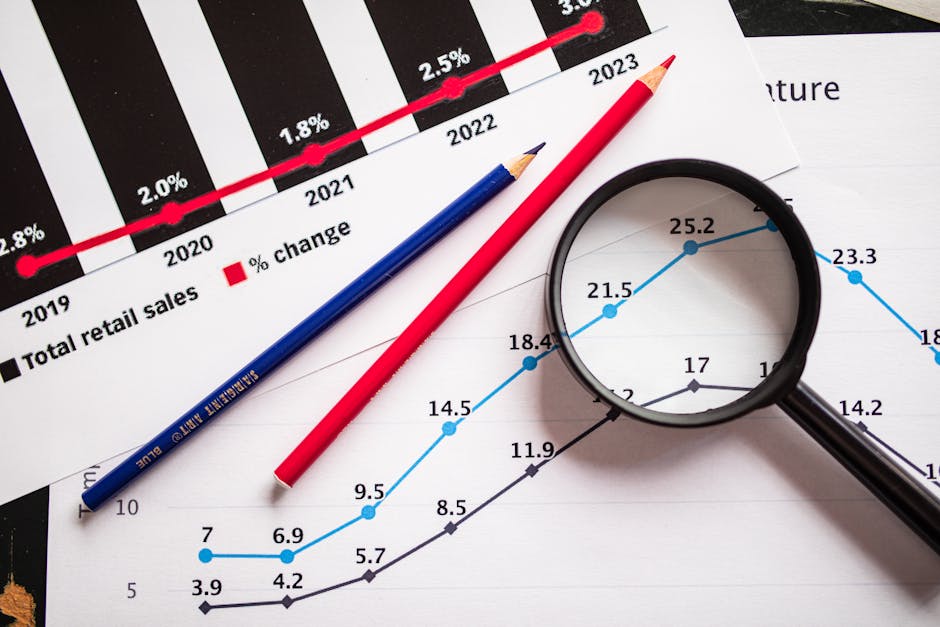
What makes TrendWave's journey particularly instructive isn't just their impressive results—a 34% revenue increase, 19-point improvement in gross margin, and CAC reduction of 31% within eighteen months—but the specific strategic choices and tactical execution that delivered those outcomes. Their experience with Predictive Analytics for Retail demonstrates how mid-market retailers can compete effectively against better-resourced competitors through disciplined implementation and focus on high-impact use cases rather than attempting to boil the ocean.
The Starting Point: Identifying High-Impact Opportunities
TrendWave's leadership team resisted the temptation to launch analytics initiatives across every functional area simultaneously. Instead, they conducted a rigorous prioritization exercise, scoring potential use cases based on three criteria: business impact potential, data availability and quality, and organizational readiness to act on insights. This disciplined approach led them to focus initially on three specific applications: demand forecasting for inventory optimization, customer churn prediction and prevention, and personalized product recommendations.
The demand forecasting opportunity was particularly compelling. TrendWave's existing approach relied on simple moving averages and buyer intuition, resulting in significant inefficiencies. Data analysis revealed they were experiencing stockouts on approximately 18% of their SKUs each month—lost sales they could never recapture in fast-fashion categories—while simultaneously carrying $12M in excess inventory requiring heavy markdowns. Their inventory turnover ratio of 4.2x lagged industry leaders by more than 30%, tying up working capital and compressing margins.
Building the Business Case
Before committing substantial resources, TrendWave's analytics team constructed detailed financial projections for each use case. For demand forecasting, they modeled scenarios assuming different levels of improvement in forecast accuracy and translated those into expected impacts on stockout rates, markdown expenses, and inventory carrying costs. Even conservative scenarios—improving forecast accuracy from their baseline 68% to a still-modest 78%—projected annual benefits exceeding $4.5M through reduced stockouts and markdown optimization alone. This rigorous financial modeling secured executive commitment and established clear success metrics from day one.
Implementation Phase 1: Demand Forecasting and Inventory Optimization
TrendWave partnered with a specialized analytics firm for AI solution implementation, recognizing they lacked in-house expertise for sophisticated model development but wanted to build internal capabilities over time. The six-month initial phase focused exclusively on demand forecasting, deliberately avoiding scope creep that derails many analytics initiatives.
The technical approach combined multiple modeling techniques rather than relying on a single algorithm. For core apparel categories with substantial historical data, the team deployed gradient boosting models that incorporated dozens of predictive features: historical sales patterns, seasonal trends, weather data, social media sentiment around specific styles, promotional calendar impacts, and even macro indicators like consumer confidence. For newer categories with limited history, they used transfer learning techniques that borrowed patterns from analogous product lines.
The Data Foundation Challenge
Before model development could begin in earnest, TrendWave confronted significant data quality issues that had accumulated over years of system sprawl. Customer purchase histories contained gaps where their e-commerce platform had changed vendors. Product categorization was inconsistent, with the same items sometimes classified differently across seasons. Returns data wasn't properly linked to original transactions, making it impossible to incorporate return rates into inventory planning.
The team spent their first two months on unglamorous but essential data engineering work: building automated ETL pipelines that consolidated data from five different systems, implementing master data management for product and customer records, and establishing data quality rules with automated monitoring. This foundational work delayed the exciting model development phase, but proved critical to eventual success. As TrendWave's analytics director noted: "We were tempted to skip past the data plumbing and jump straight to machine learning, but our implementation partner convinced us that garbage data produces garbage predictions regardless of algorithm sophistication."
Deployment and Integration
Rather than attempting a big-bang rollout across all product categories simultaneously, TrendWave piloted their demand forecasting models on three specific categories representing about 20% of total SKU count but 35% of revenue: women's dresses, denim, and activewear. This controlled approach allowed them to validate model performance, refine integration points with their inventory management system, and train merchandising teams on new workflows before expanding scope.
The technical integration required building APIs that pushed daily SKU-level forecasts into TrendWave's existing inventory planning tools, where they informed automated replenishment orders for key items. Crucially, the system didn't remove human oversight—merchandisers could review and override algorithmic recommendations when they had information the models couldn't access, like an upcoming influencer partnership or unexpected quality issues. This collaborative approach between algorithms and human expertise proved essential for organizational adoption.
Results from Phase 1: Measurable Business Impact
After six months of operation across the pilot categories, the results exceeded even optimistic projections. Forecast accuracy improved from the 68% baseline to 84% at the SKU-week level, a substantial enhancement that translated directly into inventory metrics. Stockout rates in the pilot categories dropped from 18% to 7%, capturing sales that would have been lost under the old approach. Simultaneously, excess inventory requiring markdown decreased by 41% as more accurate forecasts prevented overbuying of slow-moving items.
The financial impact was immediately visible. For the pilot categories alone, markdown expenses decreased by $1.8M annually while sales increased $2.3M through improved product availability—a combined benefit of $4.1M against implementation costs of $850K. Just as importantly, inventory turnover in the pilot categories improved from 4.2x to 5.7x, freeing up working capital for growth investments. Based on these results, TrendWave's CFO greenlit immediate expansion to all remaining product categories.
Implementation Phase 2: Customer Churn Prediction and Personalization Algorithms
Emboldened by demand forecasting success, TrendWave accelerated into their second major use case: identifying at-risk customers and deploying targeted retention campaigns. Analysis revealed that customers who made no purchase within 120 days of their previous order had an 83% probability of never returning, representing enormous lost CLV given that active customers generated an average $340 in lifetime contribution margin.
The predictive model incorporated behavioral signals beyond just recency: purchase frequency patterns, average order values, product category preferences, email engagement rates, website browsing behavior, and seasonal purchase timing. The algorithm assigned every customer a churn risk score updated weekly, flagging those crossing into high-risk territory for proactive intervention.
Personalized Win-Back Campaigns
Rather than generic discount blasts, TrendWave designed personalized win-back campaigns tailored to each customer's historical preferences and predicted responsiveness. High-value customers with luxury item purchase histories received VIP early access to new collections. Price-sensitive customers got targeted discount offers. Customers who historically responded to styling content received personalized lookbooks featuring items aligned with their past purchases.
The uplift testing results were dramatic. Customers in high-risk segments who received personalized interventions showed a 23% reduction in churn compared to control groups receiving generic messaging. More importantly, the retained customers continued purchasing at rates similar to never-at-risk segments, validating that the interventions weren't just delaying inevitable churn but genuinely re-engaging customers. With an average CLV of $340, preventing churn for just 1,000 customers annually generated $340K in retained lifetime value.
Product Recommendations and Conversion Optimization
The third pillar of TrendWave's analytics transformation focused on personalization algorithms that tailored product recommendations, homepage merchandising, and email content to individual customer preferences. The technical approach used collaborative filtering enhanced with content-based features—combining "customers who bought X also bought Y" patterns with product attribute similarities like style, color, and price point.
The implementation team deployed A/B testing infrastructure that allowed controlled rollouts and precise measurement of conversion impact. Initial tests on personalized homepage merchandising showed a 14% conversion rate improvement for customers seeing algorithmically personalized layouts versus the static merchandising everyone had seen previously. Email campaigns featuring personalized product recommendations generated 31% higher click-through rates and 27% higher conversion rates compared to generic broadcast emails featuring the same products for everyone.
Cumulative Results and Sustained Impact
After eighteen months of full operation across all three use cases, TrendWave's results validated their strategic bet on Predictive Analytics for Retail. Revenue increased 34% year-over-year in a period when comparable retailers averaged just 12% growth. Critically, the growth came primarily from existing customer engagement and conversion optimization rather than increased ad spending—customer acquisition costs actually decreased 31% as improved personalization and retention reduced the need to constantly replace churned customers with expensive new acquisition.
Gross margin improved 19 points, driven primarily by markdown optimization from better demand forecasting. Inventory turnover reached 6.8x, approaching industry-leading benchmarks and freeing up $8M in working capital. Customer satisfaction scores increased measurably as stockout frustrations decreased and personalization made shopping experiences more relevant. The site conversion rate climbed from 2.3% to 3.1%, a seemingly modest absolute increase that represented a 35% relative improvement worth millions in incremental revenue.
Key Lessons for Other Retailers
TrendWave's experience offers several transferable lessons for retailers embarking on similar transformations. First, their disciplined focus on just three high-impact use cases rather than attempting analytics transformation across every function simultaneously allowed deep execution instead of superficial dabbling. Second, their willingness to invest months in unglamorous data foundation work before jumping to exciting model development proved essential—no amount of algorithmic sophistication compensates for poor data quality.
Third, their approach to change management and organizational adoption—positioning algorithms as tools augmenting human expertise rather than replacing it, maintaining human oversight capabilities, and piloting before full rollout—prevented the passive resistance that dooms many technically successful projects. Fourth, their rigorous financial modeling and continuous measurement of business metrics rather than just technical metrics kept the entire initiative focused on actual value creation rather than theoretical accuracy improvements.
Perhaps most importantly, TrendWave maintained realistic expectations about timelines and resource requirements. Their eighteen-month transformation wasn't a sprint but a marathon requiring sustained executive commitment, substantial investment, and patience through the inevitable setbacks that accompany any significant change initiative. Retailers expecting quick wins from minimal investment will inevitably face disappointment.
Conclusion
TrendWave Fashion's journey from analytics laggard to data-driven competitor demonstrates that mid-market retailers can achieve transformative results from Predictive Analytics for Retail through disciplined strategy, rigorous execution, and sustained commitment. Their 34% revenue improvement, 19-point margin expansion, and 31% CAC reduction within eighteen months prove that competitive advantage increasingly flows to retailers who successfully harness Customer Experience Optimization through data-driven Personalization Algorithms and Demand Forecasting capabilities. As the e-commerce landscape grows more competitive and customer expectations continue rising, analytics capabilities transition from nice-to-have differentiators to survival requirements. Forward-thinking retailers are now building on predictive foundations by incorporating Generative AI Commerce Solutions that move beyond pattern recognition into creative content generation and dynamic customer engagement strategies. The retailers who win over the next decade won't necessarily be those with the biggest marketing budgets or the most SKUs—they'll be the ones who most effectively translate data into decisions and insights into action.


Comments
Post a Comment