AI in Smart Manufacturing: 5 Transformative Trends Shaping 2026-2030
The convergence of artificial intelligence with industrial operations is no longer a distant vision—it is the operational reality reshaping how manufacturers approach everything from product lifecycle management to root cause analysis. As we stand at the threshold of 2030, the manufacturing landscape is poised for transformations that will fundamentally alter production paradigms, quality control methodologies, and supply chain architectures. The next three to five years will witness AI in Smart Manufacturing evolve from experimental implementations to mission-critical infrastructure that drives competitive advantage across global operations.
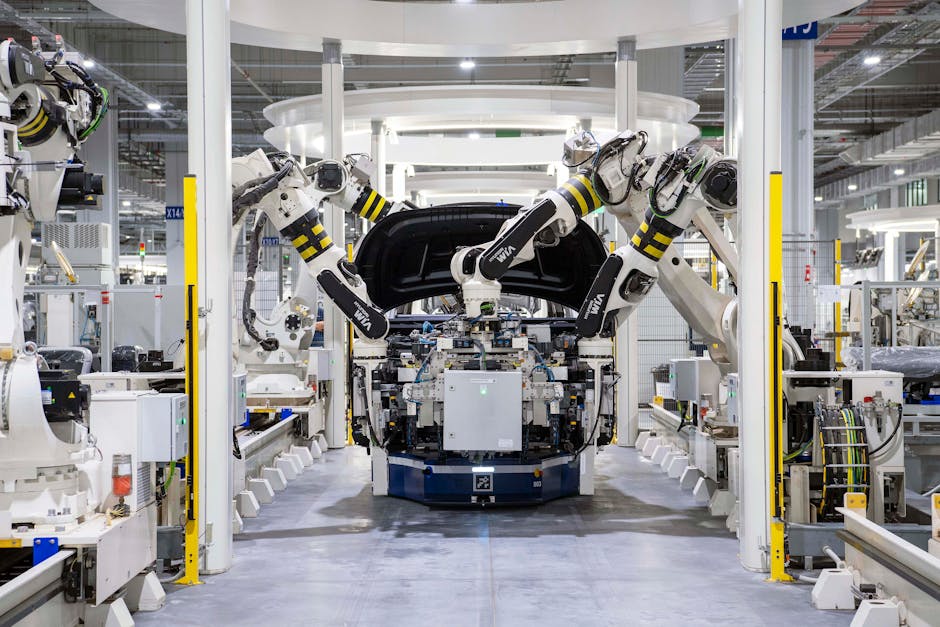
What distinguishes the current trajectory from previous technological waves is the simultaneous maturation of multiple enabling technologies—edge computing, IoT-enabled devices, advanced machine learning models, and 5G connectivity—all converging to create an ecosystem where AI in Smart Manufacturing can operate with unprecedented speed and precision. Industry leaders like Siemens and General Electric are already demonstrating what becomes possible when AI moves beyond isolated use cases to become the neural fabric connecting every aspect of production. The question facing manufacturing organizations is not whether to adopt these emerging trends, but how quickly they can integrate them into existing operations without disrupting critical production cycles.
Autonomous Production Orchestration: The Self-Optimizing Factory
By 2028, we will see the first fully autonomous production lines that require minimal human intervention for routine operations. These systems will leverage AI in Smart Manufacturing to continuously analyze real-time data from SCADA systems, CMMS platforms, and ERP integrations to make microsecond decisions about process adjustments, material flow, and quality interventions. Unlike today's automated systems that follow predetermined logic trees, these AI-driven factories will employ reinforcement learning algorithms that improve performance through continuous experimentation within safe operational boundaries.
The implications for Overall Equipment Effectiveness (OEE) are profound. Current implementations of predictive maintenance solutions typically achieve 85-92% OEE in best-case scenarios. Autonomous production orchestration will push this metric beyond 95% by eliminating the lag time between anomaly detection and corrective action. ABB's recent pilot programs have demonstrated 23% reductions in unplanned downtime when AI systems are given authority to automatically adjust process parameters based on equipment condition monitoring.
This shift toward autonomy will fundamentally change the role of production engineers. Rather than managing daily operational decisions, they will focus on designing operational constraints and optimization objectives that guide AI behavior. The challenge for organizations pursuing custom AI solutions will be establishing governance frameworks that balance autonomy with accountability, ensuring that self-optimizing systems remain aligned with business objectives and safety requirements.
Hyper-Personalized Manufacturing at Scale
The next evolution of Agile manufacturing will be driven by AI systems capable of economically producing batch sizes approaching one unit while maintaining the cost structure of mass production. This capability, enabled by AI in Smart Manufacturing, will emerge from the convergence of advanced robotics integration, real-time demand forecasting, and adaptive process planning algorithms that can reconfigure production sequences on the fly.
Dynamic Bill of Materials and Just-in-Time Precision
Traditional Material Requirement Planning (MRP) systems operate on weekly or daily planning cycles. By 2029, AI-enhanced MRP will function on sub-hour cycles, continuously recalculating optimal production sequences based on incoming customer specifications, real-time supplier availability, and current machine capacity. This dynamic approach to BOM management will enable manufacturers to offer customization options previously impossible at scale.
Rockwell Automation's research indicates that manufacturers implementing AI-driven dynamic scheduling are already seeing 40% reductions in work-in-progress inventory while simultaneously increasing product variety by 300%. This apparent contradiction—more variety with less inventory—becomes possible when AI systems can accurately predict which components will be needed and precisely when to pull them into production.
Digital Twin Technology as the Customization Engine
Manufacturing Digital Twins will evolve from static simulation models to living representations that continuously learn from physical production outcomes. These intelligent twins will enable manufacturers to validate custom product configurations in virtual environments before committing physical resources, reducing the risk and cost associated with one-off production runs. The integration of generative design algorithms with digital twin platforms will allow customers to specify performance requirements while AI generates and validates manufacturable designs that meet those specifications.
Predictive Quality and Zero-Defect Manufacturing
Quality control automation will undergo a fundamental shift from detection to prevention. Rather than identifying defects after they occur, AI in Smart Manufacturing will predict quality deviations before they manifest in finished products. This capability emerges from AI models that correlate subtle variations in process parameters—temperature fluctuations, vibration patterns, material inconsistencies—with downstream quality outcomes.
Six Sigma methodologies have long pursued the goal of 3.4 defects per million opportunities. AI-enhanced quality systems will make zero-defect manufacturing economically viable for complex products by identifying and correcting root causes in real time. Honeywell's advanced process control systems now incorporate AI models that analyze hundreds of process variables simultaneously, detecting correlation patterns invisible to traditional statistical process control methods.
The pharmaceutical and aerospace industries, where quality failures carry catastrophic consequences, will lead this transition. By 2027, we expect to see AI quality systems that can trace quality outcomes back through multi-tier supply chains, identifying which supplier batches of raw materials correlate with optimal product performance. This supply chain visibility will enable predictive quality management that extends beyond factory walls to encompass the entire value chain.
Cognitive Supply Chain Networks
Supply chain disruptions revealed fundamental vulnerabilities in just-in-time production models. The next generation of supply chain management will employ AI in Smart Manufacturing to create adaptive networks that anticipate disruptions and autonomously implement mitigation strategies. These cognitive supply chains will combine external data sources—weather patterns, geopolitical events, shipping traffic, supplier financial health—with internal production requirements to maintain resilience without sacrificing efficiency.
Advanced Predictive Maintenance Solutions will extend beyond equipment to encompass supplier reliability. AI models will assess supplier performance across multiple dimensions, predicting which suppliers are likely to experience capacity constraints or quality issues before those problems impact production schedules. This predictive approach enables manufacturers to maintain lean inventory levels while building strategic buffers for high-risk components.
General Electric's supply chain AI implementations have demonstrated the potential of this approach, reducing supplier-related production delays by 67% through early warning systems that trigger automatic sourcing adjustments. By 2028, we anticipate seeing multi-enterprise AI networks where manufacturers and suppliers share anonymized production data to create industry-wide visibility that benefits all participants.
Human-AI Collaboration in Manufacturing Operations
The workforce transformation driven by AI in Smart Manufacturing will not follow the automation-displacement narrative that dominated previous industrial revolutions. Instead, we will see the emergence of augmented manufacturing roles where AI handles data processing and routine decision-making while humans focus on complex problem-solving, change management, and strategic planning.
AR-enabled maintenance technicians will receive real-time guidance from AI systems that have diagnosed equipment issues and identified optimal repair procedures. Production planners will work alongside AI copilots that propose scheduling solutions based on objectives specified in natural language. Quality engineers will investigate anomalies flagged by AI systems, teaching those systems to recognize new failure modes through interactive feedback loops.
This collaborative model requires new approaches to training and skill development. Industry 4.0 Integration will demand workers who understand both operational technology and AI capabilities, creating demand for hybrid roles that bridge traditional manufacturing expertise with data science competencies. Organizations that invest in workforce development alongside technological implementation will capture the full value potential of AI systems.
The Integration Challenge and Path Forward
The transformative potential of these trends depends on successful integration with legacy systems that remain critical to manufacturing operations. Most facilities operate a heterogeneous technology environment spanning decades of capital investment. The challenge is not replacing these systems but creating interoperability layers that allow AI to extract value from existing infrastructure while gradually modernizing the technology stack.
Edge computing architectures will play a crucial role in this integration challenge, enabling AI models to run on factory floors with minimal latency while maintaining connectivity to cloud-based analytics platforms. This hybrid approach allows manufacturers to leverage AI capabilities without requiring complete infrastructure overhauls or exposing sensitive production data to external networks.
Conclusion
The next three to five years will separate manufacturing organizations into two distinct categories: those that successfully integrate AI in Smart Manufacturing as core operational capability, and those that treat it as peripheral technology. The trends outlined here—autonomous production orchestration, hyper-personalized manufacturing, predictive quality systems, cognitive supply chains, and human-AI collaboration—represent interconnected capabilities that reinforce each other when implemented strategically. Organizations pursuing these transformations must also consider how AI capabilities extend beyond manufacturing into adjacent functions, particularly as GenAI Financial Operations become increasingly critical for investment planning and resource allocation decisions. The manufacturers that thrive in 2030 will be those that begin building these capabilities today, treating AI not as a technology project but as a fundamental reimagining of how production creates value in an increasingly dynamic global economy.


Comments
Post a Comment