AI-Driven Banking Decisions: Five-Year Outlook for Commercial Banks
The commercial banking sector stands at a technological inflection point. Over the past decade, artificial intelligence has migrated from experimental pilot programs to mission-critical infrastructure that powers everything from mortgage application processing to real-time transaction monitoring. Yet the transformation we have witnessed so far represents merely the foundation of what lies ahead. As we look toward 2031, the architecture of decision-making across credit risk assessment, fraud detection, and regulatory compliance will fundamentally restructure how institutions like JPMorgan Chase and Bank of America operate at scale.
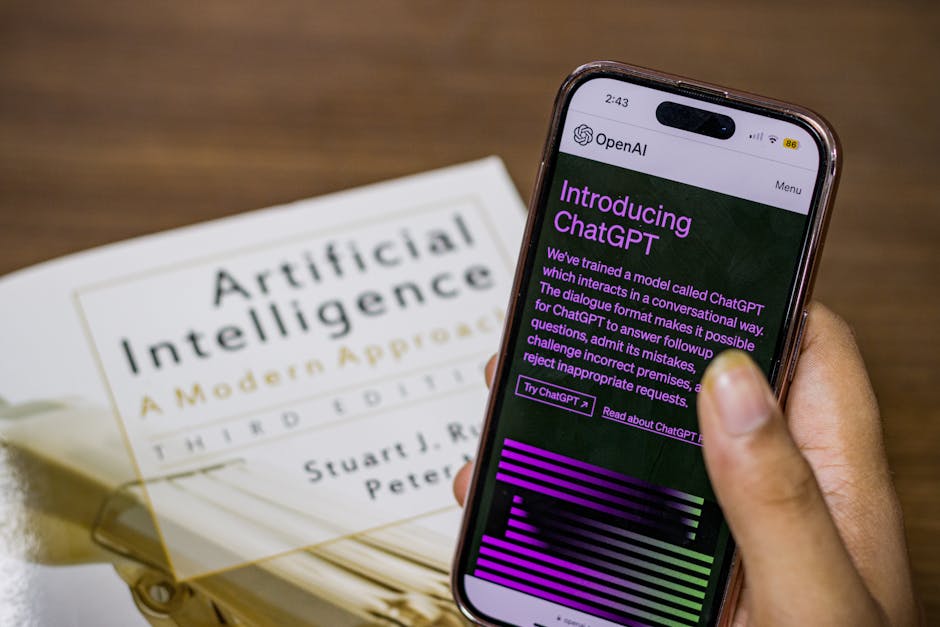
The acceleration of AI-Driven Banking Decisions is no longer a question of whether to adopt these technologies but rather how quickly institutions can deploy them across every facet of their operations. Within the next three to five years, we will witness a complete reimagining of how lending officers evaluate creditworthiness, how compliance teams detect suspicious activity patterns, and how relationship managers deliver personalized advisory services. The banks that master this transition will capture disproportionate market share while reducing their cost of service by as much as forty percent.
The Evolution of Credit Risk Assessment Through 2031
Traditional credit scoring models have served commercial banking adequately for decades, but they carry inherent limitations that AI-driven approaches are already beginning to overcome. The next generation of Credit Risk Assessment will leverage continuous learning algorithms that ingest alternative data sources in real time—social media sentiment, supplier payment patterns, utility payment histories, and even foot traffic data for retail borrowers. By 2028, we anticipate that major institutions will abandon static FICO-centric models in favor of dynamic risk profiles that update hourly rather than monthly.
This shift will fundamentally alter loan underwriting timelines. Where a business credit evaluation currently requires three to seven days for manual document review and financial statement analysis, AI-driven systems will compress this to under four hours with higher accuracy rates. The technology will automatically extract data from tax returns, bank statements, and invoices, cross-reference this information against industry benchmarks, and produce risk-weighted asset calculations that comply with Basel III requirements without human intervention. Early adopters like Wells Fargo have already demonstrated thirty-five percent faster origination times in pilot programs, and we expect this to become industry standard by 2029.
Predictive NPL Management
Non-performing loan portfolios represent one of the most significant drags on bank profitability, particularly during economic downturns. The next frontier for AI-Driven Banking Decisions involves predictive analytics that identify borrowers at elevated default risk six to nine months before delinquency occurs. These systems will analyze payment velocity changes, declining account balances, increased credit utilization, and external factors like industry distress signals to trigger early intervention protocols. Rather than waiting for a missed payment, relationship managers will proactively restructure terms or offer bridge financing, reducing ultimate charge-off rates by an estimated twenty to thirty percent.
Banking Fraud Detection Becomes Truly Preventative
Fraudulent activities continue to evolve in sophistication, with synthetic identity fraud and account takeover schemes costing the industry over thirty billion dollars annually. Current Banking Fraud Detection systems operate primarily in reactive mode, flagging suspicious transactions after they occur. The paradigm shift arriving between 2026 and 2029 will move fraud prevention to the pre-authorization stage, where AI models evaluate risk across multiple behavioral dimensions before approving any transaction.
These next-generation systems will incorporate biometric verification, device fingerprinting, transaction pattern analysis, and network graph analytics that map relationships between accounts, merchants, and IP addresses. When a customer initiates a wire transfer, the AI will instantly assess whether the recipient entity appears in known fraud networks, whether the transaction timing aligns with the customer's historical behavior, and whether the device signature matches previous authenticated sessions. Suspicious patterns will trigger step-up authentication or temporary holds, all completed within milliseconds to avoid friction for legitimate transactions.
By 2030, we project that false positive rates—currently the bane of fraud operations teams—will drop from their present fifteen to twenty percent down to below five percent. This improvement will dramatically reduce customer frustration from declined legitimate transactions while simultaneously catching sophisticated fraud schemes that evade current rule-based systems. The economic impact extends beyond direct loss prevention; reduced false positives will save hundreds of millions in manual review costs and customer service escalations.
Building the AI Infrastructure: Strategic Considerations
The technical foundation required to support advanced AI-Driven Banking Decisions demands significant architectural evolution. Legacy core banking systems were never designed to support the data velocity and model complexity that modern AI requires. Forward-looking institutions are investing heavily in AI solution development frameworks that can integrate with existing systems while providing the flexibility to deploy new models rapidly as regulatory requirements and market conditions shift.
Cloud-native architectures will become non-negotiable by 2028. The computational requirements for training deep learning models on billions of transaction records simply cannot be met by on-premises infrastructure without prohibitive capital expenditure. Major banks are already migrating their AI workloads to hybrid cloud environments that maintain sensitive customer data on-premises while leveraging cloud compute for model training and inference at scale. This infrastructure transition represents a multi-year journey, but institutions that delay will find themselves unable to compete on decision speed and accuracy.
Data Governance and Model Explainability
Regulatory scrutiny around AI decision-making will intensify significantly over the next three years. The Office of the Comptroller of the Currency and the Federal Reserve have already signaled that model explainability and bias testing will become formal examination components. Banks deploying AI Loan Underwriting systems must be able to demonstrate exactly how their models reach decisions, particularly when those decisions result in credit denials or unfavorable pricing.
The technology solution involves explainable AI frameworks that decompose model predictions into constituent factors, showing precisely which data elements contributed how much weight to the final decision. These systems will automatically generate adverse action notices that meet Fair Lending requirements while providing loan officers with detailed rationale they can discuss with disappointed applicants. By 2029, we anticipate that model explainability platforms will be as standard as the decision engines themselves, with built-in bias detection that flags potential disparate impact before models reach production deployment.
Customer Experience Transformation in Advisory Services
While operational efficiency drives much of the AI adoption narrative, the customer-facing implications will prove equally transformative. Investment advisory services and cash management recommendations have traditionally relied on periodic relationship manager reviews, perhaps quarterly for high-value commercial clients. AI-Driven Banking Decisions will enable continuous portfolio optimization, where systems monitor market conditions, client cash flow patterns, and risk tolerance indicators to proactively suggest adjustments.
A commercial client maintaining excess liquidity in a non-interest-bearing operating account will receive automated recommendations to sweep funds into higher-yielding instruments based on their upcoming payables schedule and historical disbursement patterns. These recommendations will appear through mobile banking interfaces, eliminating the need for scheduled review meetings while increasing fee income from treasury management services. The relationship manager's role evolves from periodic advisor to exception handler, focusing energy on complex situations that require human judgment while AI handles routine optimization.
Hyper-Personalization at Scale
The next three years will bring marketing personalization to levels previously achievable only for private banking clients. AI systems will analyze every customer interaction—branch visits, mobile app sessions, call center inquiries, transaction patterns—to build comprehensive behavioral profiles. When a business customer begins researching equipment financing through web searches or speaking with vendors, the bank's systems will detect this intent signal and proactively offer customized loan packages before the customer formally applies.
This level of anticipatory service requires sophisticated natural language processing that can understand unstructured communications, combined with predictive models that identify life events and business milestones. A retail customer who mentions home renovation in a secure message will automatically receive mortgage equity line information tailored to their specific property value and creditworthiness. The technology exists today; the next five years will see it deployed at institutional scale across customer bases numbering in the tens of millions.
Regulatory Compliance and AML Transformation
Anti-money laundering operations consume enormous resources across commercial banking, with compliance costs having risen forty percent over the past five years alone. Current transaction monitoring systems generate overwhelming volumes of alerts, the vast majority of which prove to be false positives after manual investigation. AI-Driven Banking Decisions applied to AML will fundamentally restructure this cost burden by 2029.
Advanced machine learning models will incorporate far richer contextual data than current rule-based systems, understanding normal business patterns for specific merchant categories, geographic regions, and customer segments. A transaction that appears suspicious in isolation may be perfectly normal when viewed against industry norms and the customer's business model. These contextual AI systems will reduce alert volumes by sixty to seventy percent while improving true positive detection rates, allowing compliance teams to focus investigative resources on genuinely suspicious activity.
Know Your Customer processes will similarly transform. Where account opening and KYC verification currently require multiple days and extensive manual document review, AI-powered identity verification will authenticate customers in minutes using facial biometrics, document analysis, and cross-referencing against global databases. Beneficial ownership identification—currently one of the most labor-intensive compliance requirements—will leverage natural language processing to automatically extract ownership structures from formation documents and public filings. By 2030, the fully automated customer onboarding experience will match consumer fintech standards while maintaining institutional-grade compliance rigor.
Workforce Implications and Organizational Change
The rise of AI-Driven Banking Decisions will inevitably reshape workforce composition and skill requirements. Contrary to dystopian predictions of mass job elimination, the next five years will see employment shifts rather than wholesale replacement. Routine analysis roles will decline as AI handles tasks like initial credit memo preparation and standard loan documentation review. Simultaneously, demand will surge for AI oversight roles, model validation specialists, and relationship managers who can leverage AI insights to deliver superior advisory services.
Banks that successfully navigate this transition will invest heavily in reskilling programs, moving loan processors into exception management roles and training branch staff to interpret AI-generated customer insights. The relationship manager of 2030 will spend less time gathering information and more time strategizing solutions, supported by AI systems that provide comprehensive client intelligence at their fingertips. This evolution requires deliberate change management; institutions that simply deploy technology without workforce transformation will fail to capture the full value potential.
Conclusion
The trajectory of AI-Driven Banking Decisions through 2031 points toward a commercial banking landscape that bears little resemblance to current operations. Credit risk assessment will operate in real time with far greater accuracy than today's batch-processed models. Fraud detection will prevent losses before they occur rather than reacting after the fact. Compliance operations will shrink their cost base while improving effectiveness. Customer experiences will match or exceed fintech standards while maintaining the relationship depth that has always differentiated commercial banking from transactional services. The institutions that move decisively to build the technical infrastructure, data foundations, and organizational capabilities required for this future will dominate the next decade of commercial banking. Those who delay will find themselves competitively disadvantaged in ways that prove difficult to overcome, as Generative AI for Banking becomes not a differentiator but a requirement for survival in an increasingly digital-first financial services ecosystem.


Comments
Post a Comment