The Ultimate AI Complaint Management Resource Guide for 2026
Navigating the landscape of modern complaint resolution requires access to the right tools, insights, and communities. Organizations across industries are transforming how they handle customer grievances, leveraging artificial intelligence to create responsive, efficient systems. This comprehensive resource roundup brings together the essential platforms, frameworks, reading materials, and professional networks that define excellence in automated complaint handling today.
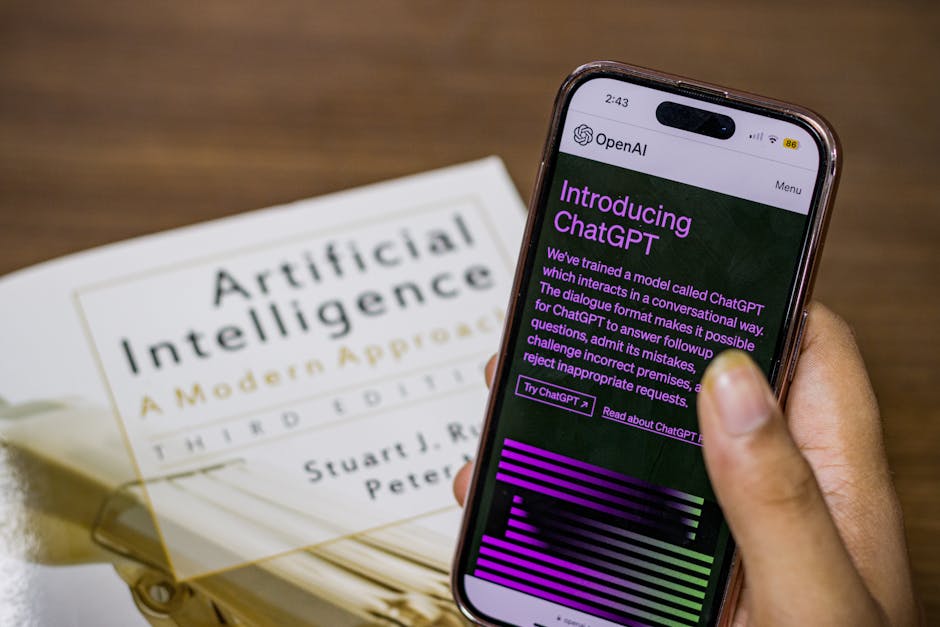
Whether you're implementing your first automated solution or optimizing an existing platform, understanding the ecosystem around AI Complaint Management proves invaluable. The resources outlined here span technical implementation guides, strategic frameworks, community forums, and cutting-edge platforms that are reshaping how enterprises address customer concerns at scale.
Leading Platforms and Tools for AI Complaint Management
The technology marketplace offers diverse solutions designed to automate and enhance complaint resolution workflows. Enterprise-grade platforms now integrate natural language processing, sentiment analysis, and predictive routing capabilities that were experimental just years ago. ServiceNow's Customer Service Management module incorporates machine learning models that categorize incoming complaints with remarkable accuracy, while Salesforce Einstein applies predictive analytics to identify escalation risks before they materialize.
Open-source alternatives provide flexibility for organizations with specialized requirements. Rasa's conversational AI framework enables teams to build custom complaint triage systems that understand domain-specific terminology and context. The platform's dialogue management capabilities allow for sophisticated multi-turn conversations that gather necessary information while maintaining empathetic communication. Similarly, Botpress offers visual workflow builders that let non-technical teams design complaint handling logic without extensive coding knowledge.
Specialized analytics tools complement these core platforms by providing deeper insight into complaint patterns and resolution effectiveness. Clarabridge's text analytics engine processes unstructured feedback across channels, identifying recurring issues that traditional ticketing systems might miss. Qualtrics XM for Customer Service combines operational data with experience metrics, revealing how complaint handling impacts broader customer satisfaction and loyalty measures.
Emerging Tools Worth Monitoring
Several newer entrants are pushing boundaries in specific complaint management domains. Forethought's autonomous support platform uses reinforcement learning to continuously improve response accuracy, while Kustomer's omnichannel CRM maintains conversation context as complaints move between email, chat, and voice channels. These tools represent the direction of Customer Service Automation, where seamless integration and contextual awareness become table stakes rather than differentiators.
Essential Reading Materials and Research
Building expertise in AI Complaint Management requires engagement with both academic research and practitioner-oriented publications. MIT's Computer Science and Artificial Intelligence Laboratory regularly publishes papers on natural language understanding that directly inform complaint classification algorithms. The Journal of Service Research features empirical studies examining how automated systems impact resolution times, customer satisfaction, and operational costs across different industries.
For strategic perspectives, the Harvard Business Review's series on AI in customer experience provides case studies from companies that have successfully scaled their complaint management transformations. Gartner's annual Magic Quadrant for Customer Service and Support Technologies offers comparative analysis of major platform vendors, while Forrester's Wave reports evaluate emerging capabilities in conversational AI and sentiment analysis.
Industry-specific publications add crucial context that generic resources cannot provide. The International Journal of Bank Marketing explores complaint handling in financial services, where regulatory requirements shape AI Implementation Strategies. Healthcare Informatics examines how medical organizations balance automation with the personal touch required for sensitive patient grievances.
Foundational Books and Comprehensive Guides
Several book-length treatments provide systematic frameworks for implementation. "AI for Customer Service" by Rao and Mirchandani walks through architectural decisions, data requirements, and change management considerations. "The Effortless Experience" by Dixon, Toman, and DeLisi, while pre-dating many current AI capabilities, establishes principles around reducing customer effort that inform how intelligent systems should be designed. More recently, "Competing in the Age of AI" by Iansiti and Lakhani contextualizes complaint management within broader operational AI strategies.
Professional Communities and Networks
Engaging with practitioner communities accelerates learning and problem-solving. The Customer Service AI Collective on LinkedIn brings together over 15,000 professionals sharing implementation experiences, troubleshooting challenges, and discussing emerging techniques. Members regularly post anonymized case studies, creating a repository of real-world lessons that academic research rarely captures.
Reddit's r/MachineLearning and r/CustomerSuccess communities host frequent discussions about complaint analysis algorithms and deployment considerations. While these forums skew technical, they provide valuable perspective on the AI capabilities that make automated complaint handling possible. The Service Automation Professionals group on Slack facilitates real-time conversations among teams actively building and maintaining Complaint Resolution AI systems.
Industry conferences offer concentrated learning and networking opportunities. The Customer Contact Week series features dedicated AI tracks with vendor demonstrations and user presentations. The Applied AI Summit brings together data scientists and customer experience leaders, fostering cross-functional dialogue about bridging technical capability with business requirements. Smaller, specialized events like the Conversational AI Summit dive deep into dialogue design and natural language processing techniques specific to support interactions.
Frameworks and Methodologies for Implementation
Structured approaches help organizations navigate the complexity of deploying AI Complaint Management systems. The CRISP-DM methodology, originally developed for data mining projects, adapts well to complaint analysis initiatives. Its phases—business understanding, data understanding, data preparation, modeling, evaluation, and deployment—provide checkpoints that ensure technical work aligns with operational needs.
For organizations prioritizing responsible AI development, the IEEE's Ethically Aligned Design framework offers principles around transparency, accountability, and bias mitigation. These considerations prove especially important in complaint handling, where algorithmic decisions directly impact customer perceptions of fairness. The framework's emphasis on human oversight aligns with best practices that keep people involved in resolution workflows even as automation increases.
Design thinking approaches complement technical frameworks by centering the customer experience. IDEO's human-centered design methodology encourages teams to prototype complaint handling flows and test them with actual users before committing to full-scale development. This iterative approach helps identify where automation enhances the experience versus where it introduces friction or frustration.
Maturity Models for Capability Assessment
Several consulting firms have developed maturity models that help organizations assess their current state and plan progression. Accenture's Customer Service AI Maturity Model defines five stages from basic automation to cognitive engagement, with specific capabilities, metrics, and organizational requirements for each level. BCG's AI Implementation Roadmap focuses on the change management dimensions, recognizing that technology deployment represents only part of a successful transformation.
Data Resources and Training Datasets
Developing effective AI models requires access to quality training data. Public datasets like the Customer Support on Twitter corpus provide thousands of labeled customer service interactions useful for training classification models. The Ubuntu Dialogue Corpus contains multi-turn technical support conversations that help teams understand how context accumulates across extended complaint resolution discussions.
For teams building sentiment analysis capabilities, the Stanford Sentiment Treebank and SemEval shared task datasets offer fine-grained emotion labels that go beyond simple positive-negative classifications. Understanding nuanced emotional states—frustration, confusion, urgency—enables more sophisticated routing and prioritization logic.
Industry-specific datasets remain harder to access due to privacy considerations, but several organizations have released anonymized collections. The Airline Customer Satisfaction dataset on Kaggle includes complaint categories and resolution outcomes across thousands of cases. Financial services firms have contributed to the Banking77 dataset, which categorizes customer intents including various complaint types with language patterns specific to that sector.
Conclusion
The resources outlined here represent starting points for building deep expertise in automated complaint resolution. As the field continues evolving, maintaining connections with professional communities, engaging with emerging research, and experimenting with new platforms ensures your capabilities remain current. The intersection of customer service excellence and artificial intelligence creates opportunities for organizations willing to invest in both technological infrastructure and the knowledge required to deploy it effectively. For those exploring broader applications of automation across business processes, understanding how Intelligent Systems transform operations in adjacent domains provides valuable context and inspiration for innovation in complaint management.


Comments
Post a Comment